
Comolli's Houseleek
Sempervivum comollii
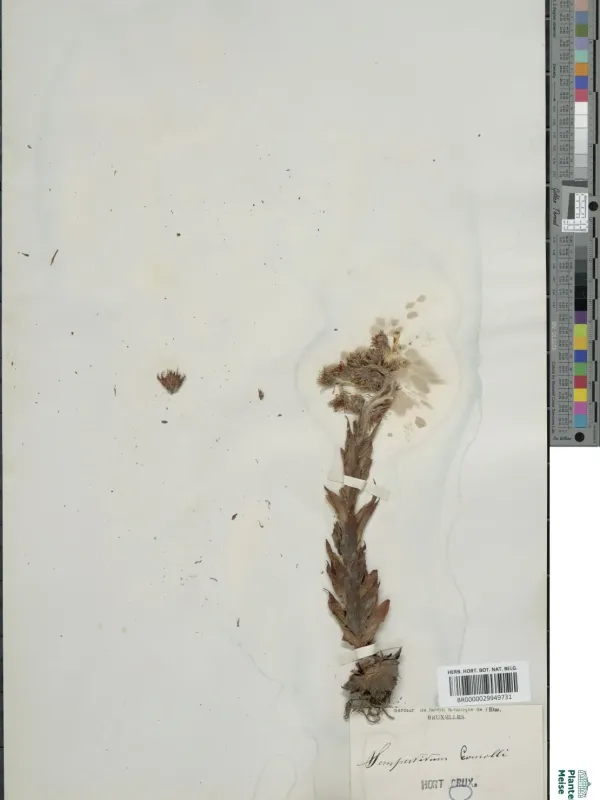
Description
Growing requirements
Comolli's Houseleek (Sempervivum comollii) is a member of the Crassulaceae family. This succulent perennial is highly valued for its dense, geometrical rosettes that create a striking appearance in xeriscaped gardens.
Originating from mountain ranges in Europe, the plant is naturally evolved for harsh, rocky conditions where drainage is excellent and moisture is limited. Its biological structure allows it to thrive in nutrient-poor substrates.
For cultivation, this species requires full sun exposure to maintain its compact shape and vibrant leaf color. Planting in containers or rocky beds with high mineral content is recommended for optimal growth.
The agrotechnical requirements are straightforward: provide sharp drainage by incorporating coarse grit or sand into the soil mix. Avoid heavy loam, which retains too much water and can lead to rapid decay of the basal leaves.
Industrially and ornamentally, this plant is used primarily for sustainable landscaping, rooftop gardening, and ground cover in temperate zones where low-maintenance flora is required.
Main diseases and pests
The primary threats to Sempervivum comollii are fungal infections such as root rot and crown rot, which occur when plants are exposed to prolonged dampness or high humidity.
Pests such as mealybugs or aphids can occasionally settle in the succulent leaves, sucking nutrients and weakening the plant's structural integrity during peak heat periods.
Prevention is the best form of defense: ensure proper spacing between rosettes to allow for adequate airflow and keep the plant base dry by using top-dressing with gravel.
If rot is detected, the affected rosettes should be isolated and removed immediately. Fungicidal treatment may be necessary if the infection spreads through a colony.
Insecticide use should be cautious; always choose products suitable for succulent tissues to avoid chemical damage to the waxy leaf surfaces that protect the plant.