
Ciliate houseleek
Sempervivum ciliosum
Description
Sowing dates
Propagation of Sempervivum ciliosum by seed is best performed in early spring, using a well-draining substrate composed primarily of sand and fine grit.
Seeds should be surface-sown and pressed gently into the medium; they require exposure to light to germinate effectively and should not be covered.
Maintaining a temperature range of 20 to 22 degrees Celsius under a protective cover ensures a uniform germination rate within several weeks.
Vegetative propagation using offsets is the preferred commercial and hobbyist method, as it yields mature-looking plants much faster than seeds.
Offsets should be separated during the active growing season and placed directly into prepared sites, requiring minimal initial watering to establish.
Growing requirements
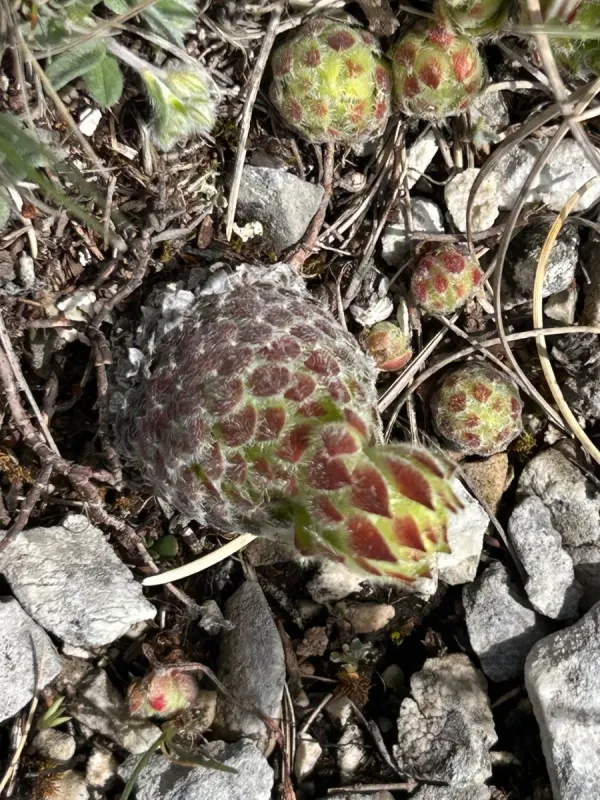
Belonging to the Crassulaceae family, the ciliate houseleek is a perennial succulent known for its dense, symmetrical rosettes covered in fine marginal hairs.
This species is highly adapted to sunny, exposed locations, needing full sun to maintain its compact habit and vibrant, often reddish leaf tips.
The substrate must be exceptionally well-draining; in garden settings, this often requires planting in gritty soils or rock crevices where water cannot pool.
Originating from the Balkan mountains, this plant is inherently cold-hardy and thrives in alpine conditions with fluctuating temperatures and low rainfall.
Regular fertilization is generally unnecessary and often harmful, as overly rich soil can lead to succulent rot and weak, etiolated growth.
Main diseases and pests
Root rot, induced by excess moisture or poor soil drainage, remains the primary threat to the vitality of the ciliate houseleek in non-alpine climates.
Mealybugs are the most persistent pest, often concealing themselves deep within the rosette base where they feed on the plant's succulent tissues.
Aphids can occasionally infest developing flower stalks during late spring, potentially reducing seed production if not managed in time.
Environmental stress, particularly high humidity combined with stagnant air, can lead to fungal infections that quickly degrade the foliage structure.
Preventative care involves ensuring consistent airflow around the rosettes and removing dead leaves promptly to prevent rot-inducing debris accumulation.