
Caucasian houseleek
Sempervivum caucasicum
Description
Sowing dates
Propagation of Caucasian houseleek is most effectively achieved through vegetative division, using the offsets or 'chicks' that grow around the base of the mother plant. Spring, after the risk of frost has passed, is the optimal time for planting these offsets in their permanent location.
For seed propagation, seeds should be sown on the surface of a light, sandy substrate. They require consistent moisture and moderate temperatures, typically around 20 degrees Celsius, to germinate successfully without being covered by soil.
Proper spacing is crucial; small rosettes should be placed at least 10-15 centimeters apart to allow for lateral growth and the formation of a healthy colony. Ensure the planting medium is well-drained to protect the sensitive rooting zone.
Young seedlings should be kept in a controlled environment until they are robust enough to be transplanted outdoors. Once established, the plants demonstrate a vigorous growth rate and will naturally colonize the available space.
Agricultural cultivation of this succulent requires minimal ongoing maintenance, as the plant is highly autonomous and efficiently utilizes its stored resources to survive in various environments.
Growing requirements
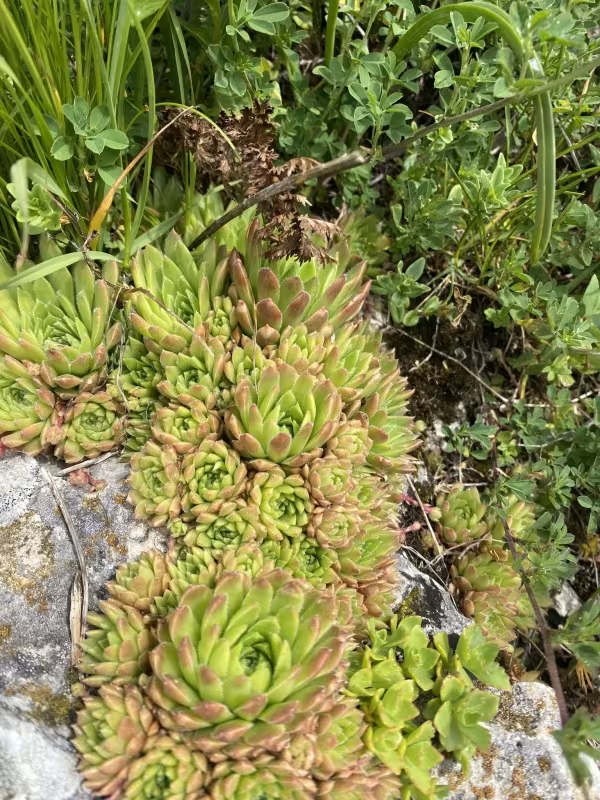
Caucasian houseleek, scientifically known as Sempervivum caucasicum, is a succulent perennial belonging to the Crassulaceae family. It is native to the high-altitude rocky terrains of the Caucasus, where it has evolved to thrive in nutrient-poor and gritty substrates.
The plant requires full sun exposure to maintain its characteristic compact rosette structure and vibrant coloration. In shaded environments, the plant tends to elongate and become vulnerable to structural weaknesses.
This species is exceptionally drought-tolerant, relying on its fleshy, water-storing leaves to endure extended periods without precipitation. It thrives in well-aerated, rocky soils with a neutral or slightly alkaline pH balance.
Cultural management involves removing weeds that may encroach upon the colonies, as competition for resources can stunt growth. Fertilization should be kept to an absolute minimum, as high nutrient levels can cause the plant to lose its hardy, succulent characteristics.
Beyond its aesthetic use in landscaping, the plant has historical significance in traditional folk medicine due to its unique chemical composition, including various organic acids and tannins.
Main diseases and pests
Root rot is the most significant threat to Caucasian houseleek, typically triggered by waterlogged soil or poor drainage. Protecting the central crown of the rosette from standing water is essential for disease prevention.
Root mealybugs can pose a serious challenge, as they inhabit the rhizosphere and compromise the root system's ability to take up water. Targeted systemic insecticides are recommended for controlling such infestations.
Slugs and snails may occasionally feed on the leaves during periods of high humidity. Mechanical barriers, such as crushed stone or coarse sand surrounding the rosettes, provide an effective deterrent against these gastropods.
Fungal leaf spots can occur when airflow is restricted or humidity is excessively high. Good garden hygiene, including removing decaying leaf litter, significantly reduces the likelihood of such infections.
- Excellent soil drainage systems.
- Adequate sun exposure.
- Monitoring for soil-borne pests.