
Cantabrian houseleek
Sempervivum cantabricum
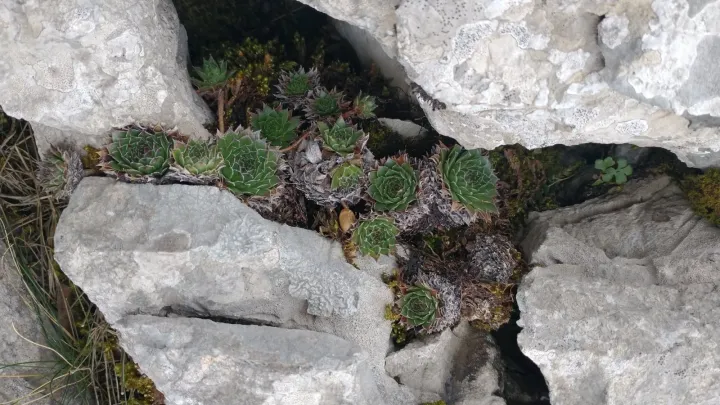
Description
Sowing dates
Propagation of the Cantabrian houseleek is most effectively achieved through the separation of offsets, or 'chicks', which grow around the parent 'hen' rosette.
The optimal time for transplanting these offsets is in early spring, allowing the young plants to establish a robust root system before the heat of summer.
Seed propagation is also possible, requiring a very fine, well-draining substrate and high levels of light to facilitate successful germination.
Seeds should be surface-sown as they require sunlight to trigger growth, with temperatures maintained steadily around 20 degrees Celsius.
Once the seedlings have reached a manageable size, they should be hardened off and transplanted into their permanent outdoor position.
Growing requirements
The Cantabrian houseleek is a perennial succulent belonging to the Crassulaceae family, characterized by its dense, compact rosettes of fleshy leaves.
Native to the mountains of Northern Spain, this species is perfectly adapted to growing in rocky crevices and environments with poor soil conditions.
It thrives in full sunlight, which is essential to maintain the vibrant leaf coloration and the tight, uniform shape of the rosette.
Soil requirements focus on drainage; this plant requires a sandy or gritty mix where water can move through quickly, preventing any saturation.
As a highly drought-tolerant crop, it requires minimal irrigation, making it an excellent candidate for xeriscaping and sustainable gardening practices.
Main diseases and pests
Root rot is the most common threat to this plant, often induced by overwatering or poor drainage in containers and landscape beds.
Mealybugs are the primary pest concern, as they often hide deep within the crevices of the rosette, shielded by their waxy, cotton-like secretions.
Aphids may also pose a risk during the flowering stage, clustering on the flower stalks to feed on the plant's nutrient-rich sap.
Slugs and snails can cause significant aesthetic damage by feeding on the leaves, which can also provide entry points for opportunistic fungal pathogens.
To mitigate these threats, maintain good air circulation around the plants and avoid overhead watering that might trap moisture inside the rosettes.