
Sedum gypsicola
Sedum gypsicola
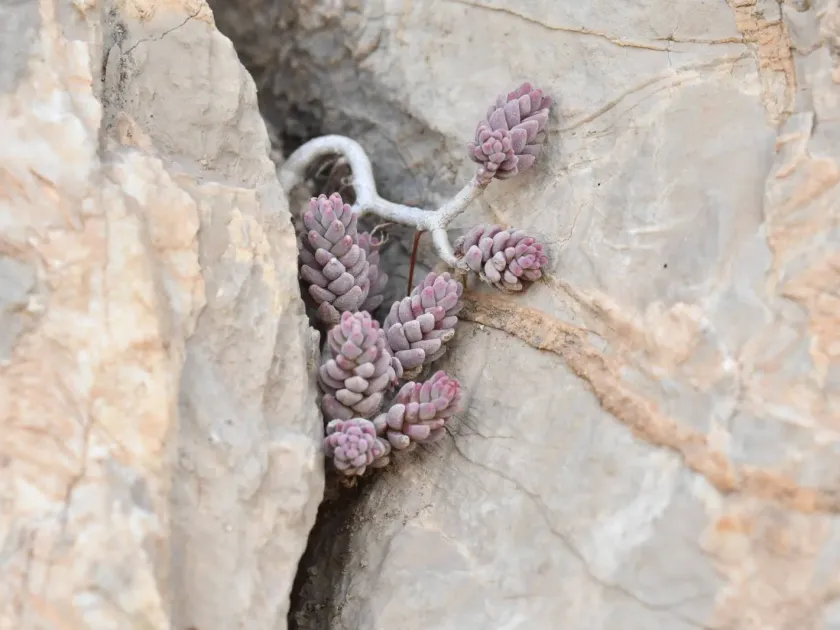
Description
Growing requirements
Sedum gypsicola is a perennial succulent plant belonging to the Crassulaceae family. It is a highly specialized species that naturally occurs in habitats characterized by gypsum and limestone outcrops, which reflects its specific name and mineral preferences.
The native distribution of this species is tied to arid, rocky landscapes where it functions as a pioneer plant on unstable soils. By forming dense, low-growing mats, the plant stabilizes the substrate, preventing erosion and creating micro-habitats for other small organisms.
In terms of climatic requirements, it is fully adapted to extreme solar radiation and prolonged periods of drought. The fleshy leaves are an evolutionary adaptation designed for efficient water storage, allowing the plant to thrive in conditions where other vegetation would fail.
Agricultural cultivation requires a substrate with excellent permeability. The ideal growing medium consists of a mixture of grit, coarse sand, and a small amount of mineral topsoil to ensure that roots remain oxygenated and free from stagnant moisture at all times.
Economically, Sedum gypsicola is primarily utilized in landscaping, particularly for xeriscaping and rock gardens. Its ability to grow in poor, alkaline soils makes it an excellent candidate for the restoration of degraded quarry sites or rocky embankments.
Main diseases and pests
The most significant physiological threat to Sedum gypsicola is waterlogging. Excessive moisture leads to root rot, caused by various soil-borne pathogens like Pythium and Phytophthora, which proliferate rapidly in heavy or poorly drained garden soils.
Pests such as mealybugs represent a common challenge, especially in nursery settings. These insects hide in the tight clusters of the foliage, making physical removal difficult, and often requiring the application of systemic pesticides to achieve full control.
Aphids can also colonize the growing tips of the succulent, sucking sap and weakening the plant's structural integrity. Monitoring the succulent during the early spring growth phase is essential for preventing rapid infestation across the entire planting area.
Fungal leaf spots can develop during humid, stagnant periods in the late autumn. Improving air circulation around the plants and avoiding overhead irrigation are the most effective management strategies to mitigate these risks in horticultural practice.
Insects like vine weevils may cause damage to the root system, which is often difficult to detect until the plant starts to wilt. Incorporating integrated pest management practices, including biological control agents like nematodes, is recommended for large-scale production.