
Alpine stonecrop
Sedum alpestre
Description
Growing requirements
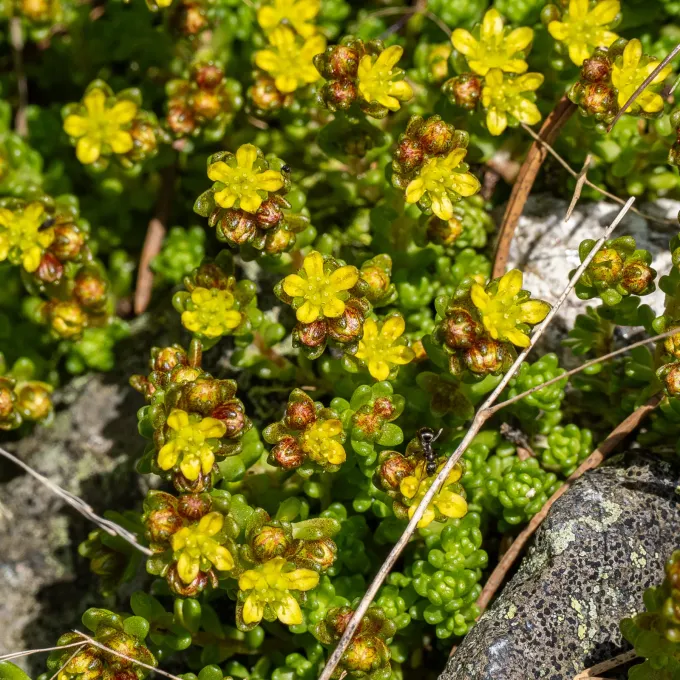
Alpine stonecrop (Sedum alpestre) is a perennial succulent belonging to the Crassulaceae family. It is native to high-altitude regions of Europe, where it thrives in rocky crevices and alpine meadows under harsh environmental conditions.
Botanically, the plant is characterized by its compact habit and fleshy leaves that store water efficiently. This adaptation allows the species to survive in environments with limited water availability and significant fluctuations in temperature.
Successful cultivation requires soil that is exceptionally well-drained and gritty. Heavy clay soils that retain water must be amended with grit or sand to mimic the natural alpine habitat and prevent root decay.
Sunlight is a critical requirement for this species. It demands full sun to maintain its dense, cushion-like form and to ensure robust growth. Insufficient light results in elongated stems that are prone to breakage and disease.
In terms of agricultural practice, Sedum alpestre requires almost no maintenance once established. It is an ideal candidate for rock gardens, crevice plantings, and green roofs, needing only occasional weeding during the initial establishment phase.
Main diseases and pests
Root rot is the most common threat to Alpine stonecrop, caused primarily by poor soil drainage or excessive irrigation. Ensuring a steep planting angle or a stony substrate is key to avoiding moisture-related losses.
Aphids can colonize the soft tissue of new growth during the spring. If infestations occur, they can be managed using gentle insecticidal soaps or by manually removing the affected plant parts.
Root mealybugs can pose a hidden threat, feeding on the root system and causing stunted growth. Soil-drenching treatments are necessary if the presence of these pests is detected during inspection.
Fungal leaf spot diseases may appear during periods of high humidity. Improving air circulation around the plants is the primary cultural control method for managing such pathogens.
Voles and rodents occasionally damage the root systems during the winter. Using wire mesh barriers during the planting process can protect the plants from such wildlife disturbances.