
Buerger's Figwort
Scrophularia buergeriana Miq.
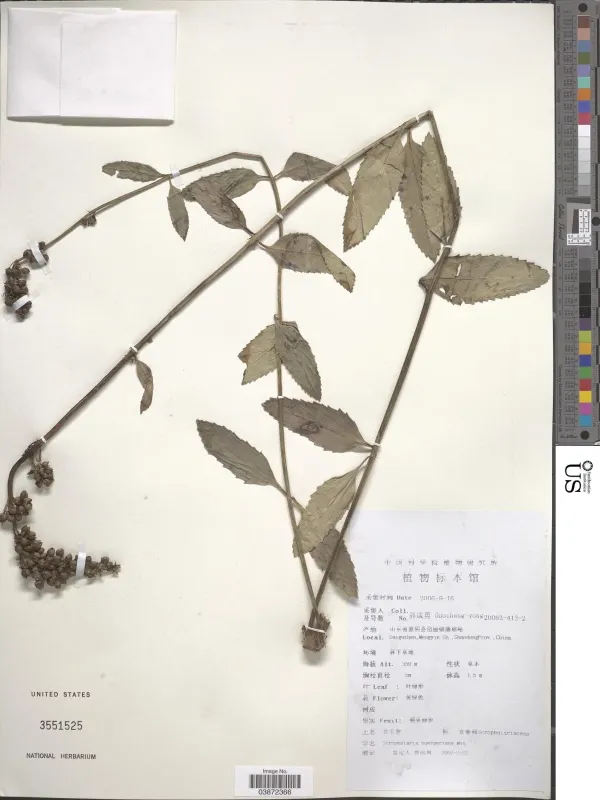
Description
Sowing dates
Sowing Buerger's figwort is typically performed in early spring, once the soil has warmed sufficiently. Autumn sowing is also an option, as it allows seeds to undergo natural stratification, which often results in more vigorous seedling emergence.
For commercial cultivation, seeds are sown in rows spaced approximately 50–60 centimeters apart. This spacing is critical for facilitating mechanical inter-row cultivation and ensuring each plant has adequate access to nutrients and light.
Seeds should be covered with only a thin layer of soil, about 1–2 centimeters deep. Because the seeds are small, they require consistent surface moisture to germinate effectively, so irrigation management during the sowing phase is vital.
Seedling development is initially slow, making weed control the primary concern in the early stages. The use of mulch or early manual weeding is recommended to prevent competition and to protect the young plants.
As a perennial species, the crop establishes its root system gradually. Proper spacing and sowing depth during the first year dictate the uniformity of the harvest in subsequent seasons.
Growing requirements
Buerger's figwort thrives in well-drained, fertile soils with a neutral to slightly alkaline pH. Heavy, waterlogged clay soils should be avoided as they significantly increase the risk of root diseases and poor plant development.
The plant prefers sunny locations, as adequate solar exposure is essential for the synthesis of bioactive compounds, particularly iridoid glycosides, within the roots. Southern or south-western slopes are ideal for production.
While the species is hardy and tolerant to cold temperatures, consistent soil moisture is required during the growing season. Supplemental irrigation is advisable in regions with low rainfall or during prolonged dry spells.
Organic matter enrichment, such as the incorporation of compost before planting, significantly boosts growth and root yield. Proper drainage is the most important factor in site selection.
Crop rotation should be practiced to maintain soil health and reduce the buildup of soil-borne pathogens. Avoid planting on fields that previously held other members of the Scrophulariaceae family.
Yield
The economic value of Buerger's figwort lies in the harvesting of its roots. Yields can reach 1.5 to 2 metric tons of dried root per hectare, depending on the management intensity and field conditions.
Root mass accumulates throughout the growth cycle, with the second or third year typically being the most productive period for harvesting. Harvesting too early results in low biomass, while delaying too long can lead to woody, lower-quality roots.
Soil quality, nitrogen levels, and moisture availability are the primary variables affecting total yield. Intensive cultivation methods can maximize production but require strict adherence to hygiene and maintenance schedules.
The final yield is also determined by the efficiency of the post-harvest cleaning and drying process. Any loss during cleaning or degradation during drying negatively impacts the final merchantable volume.
Productivity is monitored through regular scouting, which allows growers to adjust irrigation and fertilization schedules to optimize root growth during the peak vegetative months.
Main diseases and pests
The most significant threats to Buerger's figwort are fungal pathogens such as root rot, which are often exacerbated by poor drainage and excess humidity. Preventive measures like wide spacing are essential.
Insect pests, including aphids and leaf-eating beetles, may affect foliage health. Integrated pest management strategies are suggested to protect the plant without contaminating the medicinal root stock.
Weed competition is a constant threat throughout the vegetative stage. Weeds not only deprive the crop of resources but also provide habitats for secondary pests and diseases.
Proper field sanitation, including the removal of dead plant material at the end of the season, reduces the overwintering capacity of many pests and pathogens.
In cases of infestation, early identification and the use of targeted biological controls help maintain crop health and ensure the safety of the end-product for pharmaceutical processing.
Harvesting
Harvesting takes place in late autumn after the foliage begins to yellow and die back. This stage indicates that the plant has ceased vegetative growth and effectively stored compounds in the roots.
Mechanical diggers or plows are used to carefully lift the roots from the soil. The harvested material must be cleaned immediately to remove dirt, debris, and small, non-viable root fragments.
Once cleaned, the roots are subjected to controlled drying in specialized units. Maintaining a temperature between 40°C and 50°C ensures that moisture is removed efficiently without degrading sensitive chemical components.
After drying, the roots are stored in breathable containers or sacks in a cool, dark, and well-ventilated area to prevent re-absorption of moisture and mold growth.
The final stage is quality inspection, where the dried roots are checked for color, texture, and bioactive content before being sent to the processing facility.