
Early saxifrage
Saxifraga virginiensis
Description
Growing requirements
The Early saxifrage (Saxifraga virginiensis) is a herbaceous perennial plant belonging to the Saxifragaceae family. It is native to North America, where it thrives in rocky outcrops, slopes, and open woodlands.
The plant requires well-draining, humus-rich soil to flourish in a garden setting. It performs best in partial shade, as prolonged exposure to intense sunlight can scorch its basal leaves and stress the root system.
Regarding climate, it prefers cool, temperate conditions. Sufficient air circulation is essential to prevent moisture-related issues, as stagnant, humid air can lead to foliage decay during the warmer months.
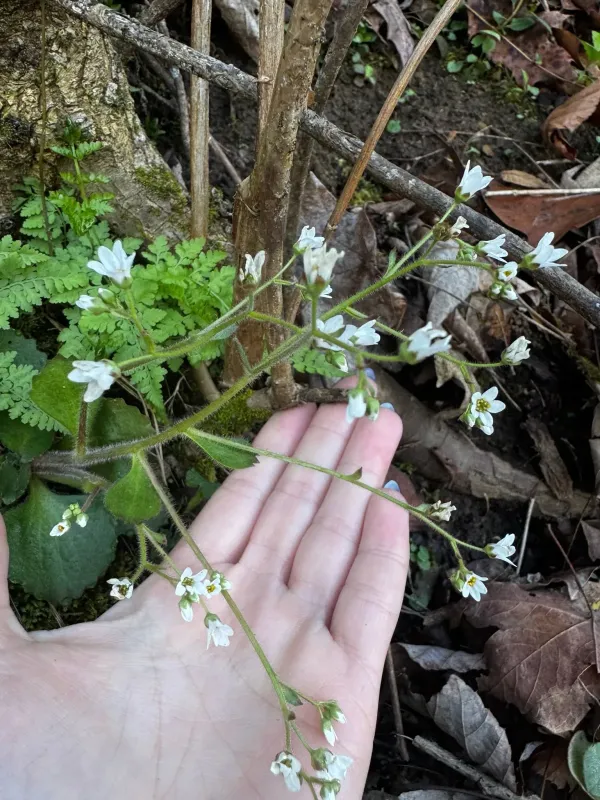
Botanically, it features a rosette of obovate leaves and a central scape that produces a panicle of small, white flowers. These bloom in early spring, marking the start of the growing season.
In landscaping, this species is highly valued for rock gardens, crevice planting, and naturalistic woodland designs, providing a delicate and elegant aesthetic to early spring landscapes.
Main diseases and pests
The primary threats to Saxifraga virginiensis include crown and root rot, which are often caused by poor drainage or excessive soil moisture. Ensuring a gritty, well-draining substrate is vital.
Pests like aphids can occasionally infest the flower stalks during the peak of the bloom. Regular monitoring and gentle washing with water are often sufficient to keep the populations in check.
Slugs and snails can cause significant damage to the succulent-like foliage during damp spring weather. Implementing physical barriers like crushed shells or gravel around the base can discourage these pests.
Fungal diseases are a concern in poorly ventilated garden areas. Maintaining spacing between individual plants helps improve airflow and reduces the risk of fungal spores taking hold.
Ultimately, the health of the plant is best maintained by mimicking its native habitat. Proper placement in an environment that prevents extreme drought or waterlogging ensures long-term vitality.