
Saxifraga subverticillata
Saxifraga subverticillata
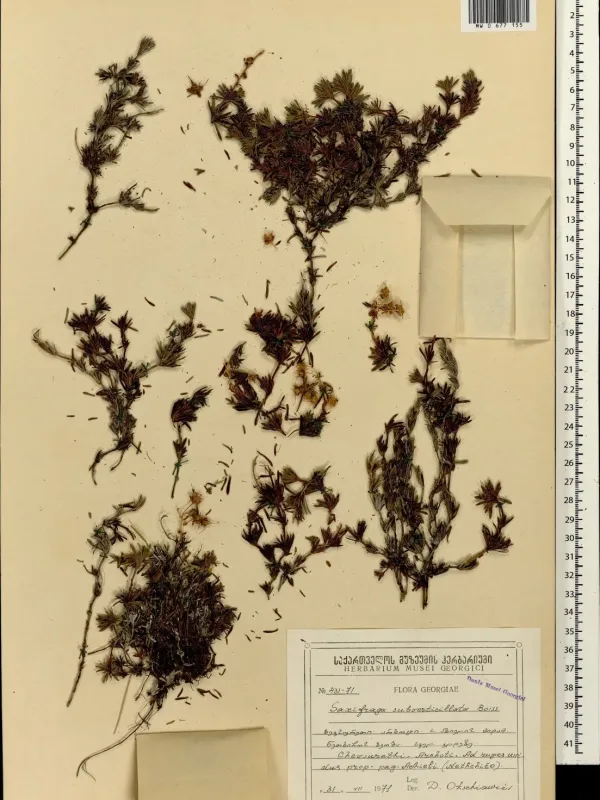
Description
Sowing dates
Propagation of Saxifraga subverticillata, a member of the Saxifragaceae family, is typically achieved through seeds or vegetative division.
Seeds should be sown in late winter or early spring, often requiring a cold stratification period to break dormancy and ensure uniform germination.
Given the minute size of the seeds, they must be sown on the surface of the growing medium without covering, kept in a humid environment.
Seedlings should be hardened off and transplanted into their permanent outdoor location only after the last frost of the season has passed.
Vegetative division is best performed in the early autumn or immediately following the blooming cycle to allow the plant time to recover before winter.
Growing requirements
This species is native to rocky alpine habitats, necessitating a well-draining, gritty soil mix to prevent moisture from pooling around the crown.
The plant thrives in bright, filtered light and requires a location that mimics its natural high-altitude environment with moderate air humidity.
While tolerant of some sun, it benefits from light shade during the hottest part of the summer to prevent leaf scorch and stress.
Watering should be approached with care: the substrate should remain moist but never waterlogged, avoiding direct contact with the foliage.
Routine maintenance includes keeping the site free of weeds and ensuring good air circulation around the rosettes to prevent stagnant air pockets.
Main diseases and pests
The most common threat to this plant is crown rot caused by excessive soil moisture and poor drainage, which can rapidly kill the plant.
Fungal pathogens such as powdery mildew can develop if the planting site lacks adequate airflow or if the plants are placed too close together.
Pests like spider mites and aphids are known to target the tender foliage during periods of heat and drought, weakening the plant.
Gastropods such as slugs and snails are significant threats, often consuming entire rosettes and leaving the plant vulnerable to secondary infections.
Integrated pest management, including regular inspection and maintaining tidy growing conditions, is essential for keeping the plants healthy.