
Saxifraga sempervivum
Saxifraga sempervivum
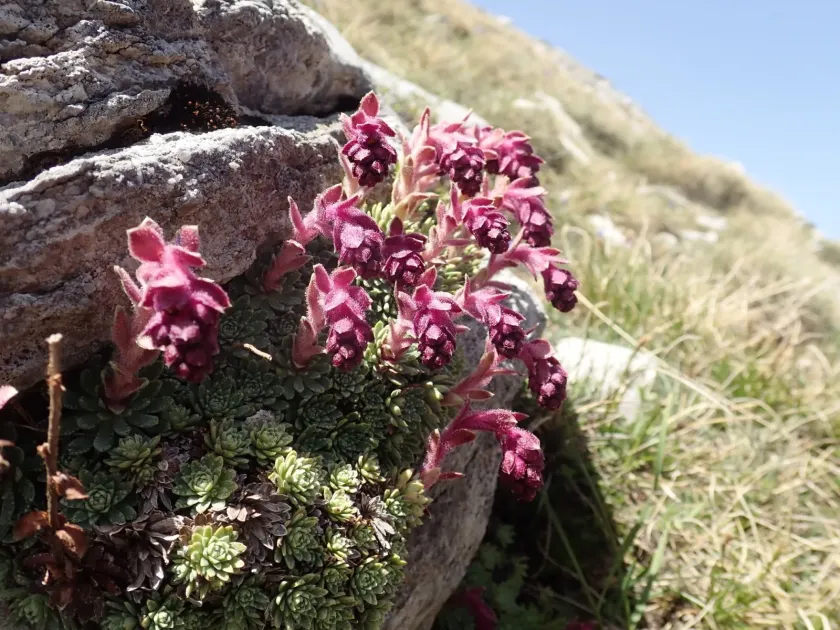
Description
Growing requirements
Saxifraga sempervivum is a perennial plant belonging to the Saxifragaceae family. Native to the mountainous regions of Southeastern Europe, this species is well-adapted to high-altitude rocky environments and harsh climatic conditions.
The plant features dense, basal rosettes of succulent, leathery leaves that resemble houseleeks. Its foliage is often edged with white calcified pores, which are a characteristic biological adaptation for thriving in limestone-rich soils.
Successful cultivation requires a substrate that mimics its natural habitat: sandy or stony soil with excellent drainage. Stagnant moisture is the primary enemy of the root system, so elevated beds or rock crevices are ideal planting locations.
In terms of light, the plant prefers full sun to light partial shade. In cooler northern climates, it can handle intense sunlight, while in warmer regions, protection from the direct midday sun is necessary to prevent leaf scorching.
Saxifraga sempervivum is widely utilized in professional landscaping for rock gardens, trough gardens, and alpine collections. Its structural appearance and evergreen nature make it a versatile choice for year-round garden design.
Main diseases and pests
The primary threats to this species include root rot and fungal infections, which are almost exclusively caused by excessive humidity, poor aeration, or high organic matter content in the soil mix.
To prevent disease, it is essential to ensure that the area around the base of the rosette is kept dry using a layer of fine gravel or grit, which promotes rapid water drainage away from the foliage.
Pests such as aphids and spider mites can occasionally affect the plant, particularly in sheltered or poorly ventilated environments. Early detection is key, as the density of the rosettes can make treatment difficult.
Mollusks, including snails and slugs, are significant threats, as they are attracted to the succulent nature of the leaves. Physical barriers or organic molluscicides are recommended for effective pest management.
Regular maintenance, including the removal of dead or decaying foliage from the bottom of the rosettes, is a critical agronomic practice to reduce the risk of infestation and promote healthy growth.