
Saxifraga sancta
Saxifraga sancta
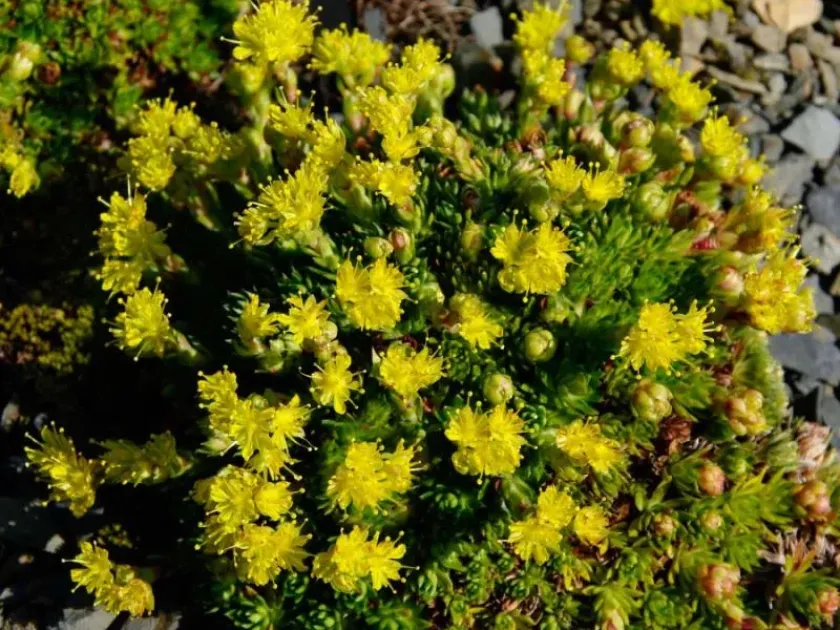
Description
Growing requirements
Saxifraga sancta is a perennial flowering plant belonging to the Saxifragaceae family. Native to the mountainous regions of the Balkans and Turkey, it is highly valued in horticulture for its dense, moss-like mats and vibrant yellow flowers.
This species requires exceptionally well-draining soil to thrive. In cultivation, it is best suited for rock gardens, crevice plantings, or troughs where moisture cannot accumulate around the crown of the plant.
Regarding light conditions, Saxifraga sancta prefers full sun to light shade. In cooler climates, it performs best in full sun, while in hotter regions, protection from the harsh midday sun is necessary to prevent tissue scorching.
The plant is considered hardy and can withstand low winter temperatures, provided that the crown remains dry. Excessive moisture during dormancy is the primary cause of plant failure, leading to crown rot.
Minimal maintenance is required for this species. Fertilization should be kept to an absolute minimum, as over-fertilizing leads to succulent, weak growth that is more susceptible to disease and winter damage.
Main diseases and pests
The most significant threat to Saxifraga sancta is root rot caused by poor soil drainage. If the soil remains saturated for extended periods, the plant’s health declines rapidly, leading to the collapse of the foliage mats.
Fungal diseases such as rust can occur when air circulation is poor, particularly during humid seasons. Keeping the immediate environment clean and ensuring the plants are not overcrowded helps to mitigate this risk.
Slugs and snails are the most common pests, as they are attracted to the lush, compact growth of the plant. These pests can rapidly defoliate a specimen, necessitating the use of deterrents or manual removal.
In hot, dry weather, spider mites may infest the plant, causing the leaves to lose their healthy green color and appear stippled. Regular inspection is recommended to identify early signs of infestation.
Cultural management is the best defense against threats. Planting in elevated, sloped, or highly porous substrates and avoiding overhead watering during periods of high humidity will significantly extend the plant's longevity.