
Round-leaved saxifrage
Saxifraga rotundifolia
Description
Growing requirements
The round-leaved saxifrage (Saxifraga rotundifolia) is a perennial herbaceous plant belonging to the Saxifragaceae family. Native to the mountainous regions of Central and Southern Europe, this species typically inhabits cool, shaded woodland areas and rocky slopes.
Agricultural and horticultural requirements for this species include rich, humus-based, and consistently moist soil. Unlike many other rock-dwelling species, this plant thrives in partial to full shade, making it a valuable asset for damp, shaded garden beds.
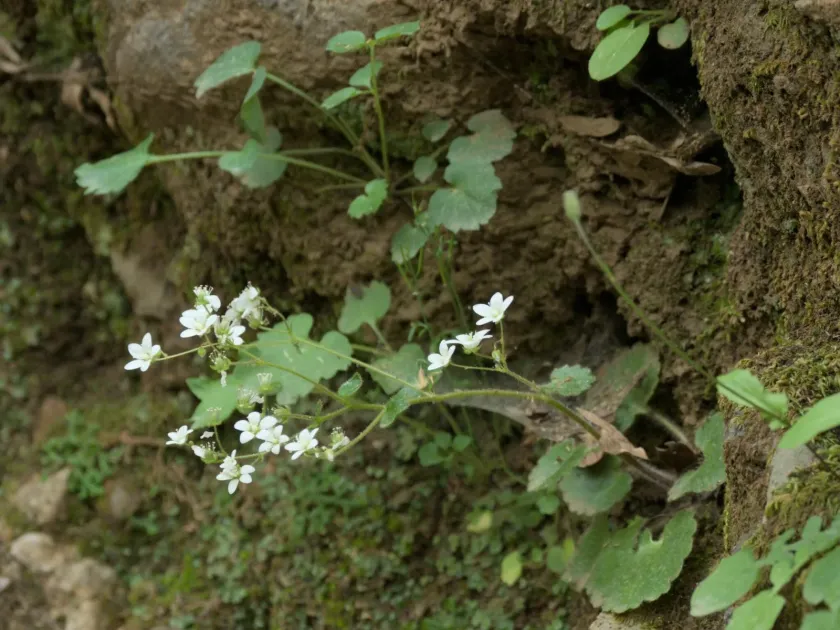
The botanical structure is defined by its kidney-shaped to round leaves with serrated margins, forming a basal rosette. It produces thin, branched flower stems that bear clusters of small, white flowers dotted with reddish or purple spots, enhancing its aesthetic appeal.
Regarding climate preferences, the round-leaved saxifrage performs best in cooler, temperate climates with moderate humidity levels. It lacks tolerance for prolonged drought or intense, direct heat, requiring careful site selection in warmer regions.
In terms of хозяйственное usage, the plant is primarily cultivated for ornamental purposes. It is frequently incorporated into alpine gardens, rockeries, and woodland-style landscapes to provide texture and delicate seasonal blooms in low-light environments.
Main diseases and pests
Primary threats to the plant's viability include waterlogged soil and poor drainage, which can lead to rapid root rot. Ensuring a porous substrate and adequate drainage capacity is crucial for the long-term survival of the plant in garden settings.
Slugs and snails represent the most significant pests for this species. These mollusks are attracted to the succulent-like foliage and can cause severe damage within a short period, especially in the damp, shaded microclimates the plant prefers.
Fungal pathogens may occur if air circulation is insufficient, leading to foliage spotting or crown rot. Maintaining proper plant spacing and preventing overhead irrigation can significantly reduce the risk of such fungal issues.
Invasive weeds can compete with the round-leaved saxifrage, especially during the early stages of establishment. Regular weeding and the application of organic mulch help maintain a clear growing space and preserve soil moisture levels.
General maintenance involves monitoring for signs of stress during heatwaves and providing supplemental irrigation if necessary, although it is vital to avoid wetting the foliage directly during peak sunlight hours to prevent scorching.