
Saxifraga rigoi
Saxifraga rigoi
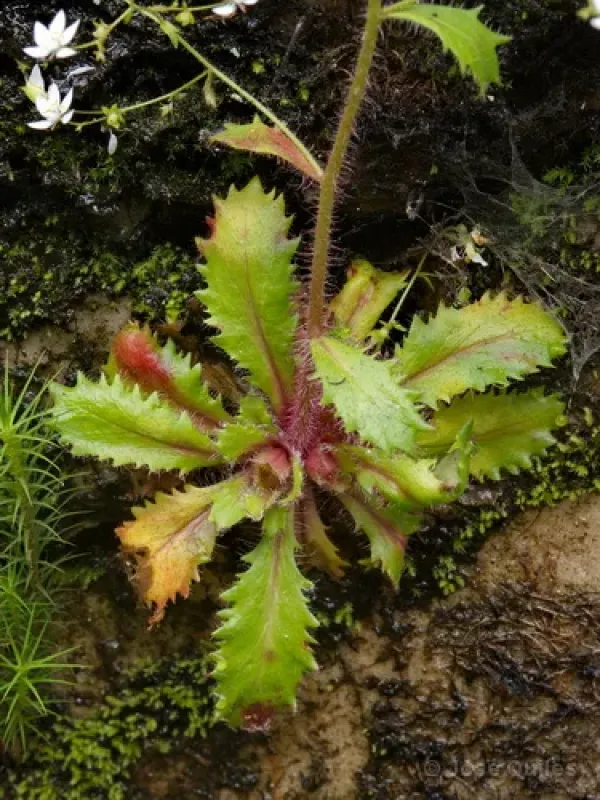
Description
Growing requirements
Saxifraga rigoi is a perennial herbaceous plant belonging to the Saxifragaceae family. This species is native to specific mountainous regions, primarily in Spain, where it thrives in rugged, rocky terrain.
The core requirement for cultivating this plant is exceptional soil drainage. It performs best in a gritty, alkaline or neutral substrate that mimics its natural high-altitude environment.
Exposure to full sun is ideal for Saxifraga rigoi to maintain its compact growth form. Proper air circulation is essential to prevent the accumulation of moisture within the dense leaf rosettes.
Irrigation should be applied with extreme caution. The plant is drought-tolerant once established and suffers significantly from saturated soil, which often leads to root collar rot.
Regarding soil fertility, it is recommended to provide only minimal nutrient input, as high levels of organic matter or nitrogen fertilizers can compromise the plant's natural hardiness.
Main diseases and pests
The primary threats to Saxifraga rigoi are fungal pathogens, specifically those causing root rot, which are triggered by waterlogged conditions and poor air movement.
Aphids can frequently infest the flower stalks and young rosettes during the spring growth phase, requiring prompt intervention with gentle insecticidal soaps or sprays.
Spider mites represent a significant risk during hot, dry summer months, leading to leaf discoloration and a general decline in the plant's health if left untreated.
Slugs and snails are notorious for feeding on the succulent foliage, particularly in humid climates, necessitating the use of perimeter barriers or organic bait to protect the rosettes.
Prevention involves maintaining a clean growing area, removing dead plant material regularly, and ensuring the surface of the soil around the plant remains dry and free of debris.