
Saxifraga presolanensis
Saxifraga presolanensis
Description
Growing requirements
Saxifraga presolanensis is a member of the Saxifragaceae family. This species is native to the high-altitude limestone cliffs of the Presolana massif in the Italian Alps. It is highly sought after by collectors of alpine plants for its characteristic cushion-forming growth habit.
The cultural requirements for this plant are stringent, focusing on excellent drainage. A substrate composed of limestone chippings, grit, and minimal organic matter is necessary to mimic its natural cliff-dwelling environment. Water must never be allowed to stagnate near the crown.
The plant thrives in partial shade or areas with morning sun, avoiding the harsh midday heat of lower altitudes. Good air circulation is critical to prevent heat stress and fungal issues, as high humidity without airflow is detrimental to the species.
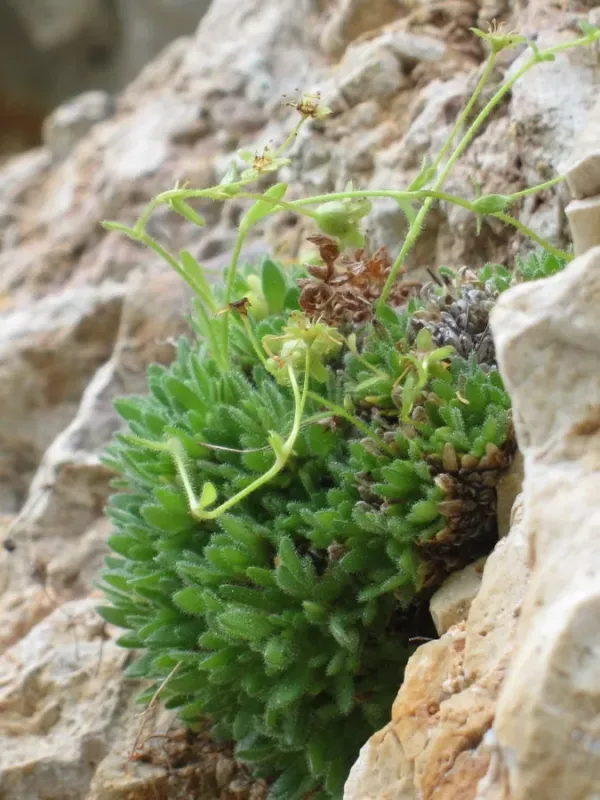
Botanically, it forms dense rosettes of small, imbricated leaves. During the flowering season, the plant produces short stalks bearing delicate white flowers. Its compact structure makes it an ideal candidate for troughs, crevice gardens, and specialized alpine collections.
Maintenance is minimal, requiring only occasional watering during the growing season. Fertilization is generally not recommended as it encourages leggy growth and diminishes the plant's natural, dense form. The focus should remain on stability and drainage.
Main diseases and pests
The primary threats to Saxifraga presolanensis are fungal pathogens, specifically crown and root rot. These occur primarily due to poor drainage or excessive humidity around the base of the rosettes.
Pest issues include spider mites, which can infest the foliage in hot, dry conditions, and aphids that target developing flower buds. Prompt identification and management are required to protect the integrity of the cushion.
Preventative measures involve ensuring the plant is kept in a grit-based medium and that the crown is kept away from constant moisture. Top dressing with stone chippings helps keep the foliage clean and dry.
If symptoms of disease appear, affected areas must be removed immediately to prevent spread. Systemic fungicides may be used as a last resort, provided they are safe for sensitive alpine species.
Regular inspections of the cushion's density and coloration are recommended to detect stress early. Keeping the environment consistent with its alpine origins is the best strategy for long-term plant health.