
Saxifraga porophylla
Saxifraga porophylla
Description
Growing requirements
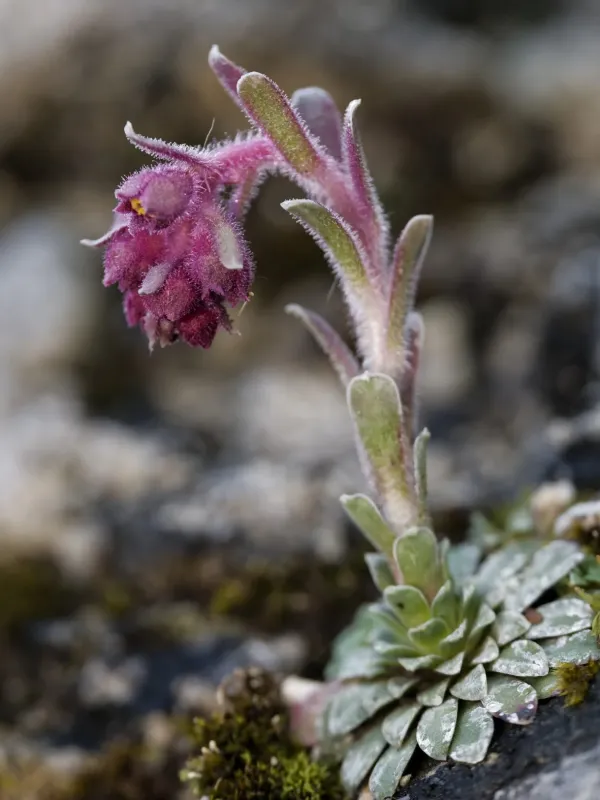
Saxifraga porophylla is a perennial herbaceous plant belonging to the Saxifragaceae family. Native to the mountainous regions of Southern Europe, it is well-adapted to life in calcareous rocky outcrops and crevices.
The botanical structure consists of dense, cushion-forming rosettes. The leaves are typically encrusted with calcium deposits, which is a key survival mechanism for this species in harsh, nutrient-poor alpine environments.
To cultivate this plant successfully, one must replicate its natural rocky habitat. It requires a free-draining, mineral-rich substrate with an alkaline pH. Planting in pure garden soil without proper drainage will inevitably lead to root failure.
Climate requirements for this species include plenty of bright, indirect sunlight and excellent air circulation. It thrives in moderate temperatures and is sensitive to high humidity combined with stagnant summer heat, which can cause physiological stress.
Agrotechnical maintenance focuses on providing grit mulching around the crown to prevent leaf contact with damp soil. Fertilizers should be avoided to maintain the plant's characteristic compact habit and prevent weak, etiolated growth.
Main diseases and pests
The primary threat to Saxifraga porophylla is fungal infection, most notably crown rot and root rot, often triggered by waterlogged conditions. Once established, these pathogens are difficult to eradicate.
Pests such as spider mites may infest the foliage during periods of dry heat, leading to yellowing and premature aging of the rosettes. Regular monitoring of the foliage is essential for early detection.
Root-feeding larvae, such as vine weevil grubs, can cause severe damage by consuming the root system. This often results in the sudden wilting of previously healthy rosettes during the peak of the growing season.
Preventative measures against diseases involve strict irrigation management, ensuring that the substrate dries out sufficiently between waterings and that the foliage remains dry.
Chemical control should be considered a last resort. If necessary, systemic fungicides or targeted insecticides should be applied with caution, ensuring that the products are safe for the sensitive and specialized tissues of alpine plants.