
Saxifraga media
Saxifraga media
Description
Growing requirements
Saxifraga media is a perennial flowering plant belonging to the Saxifragaceae family. Native to the limestone mountain ranges of the Pyrenees, this species has evolved to thrive in rocky crevices and poor, mineral-rich soils.
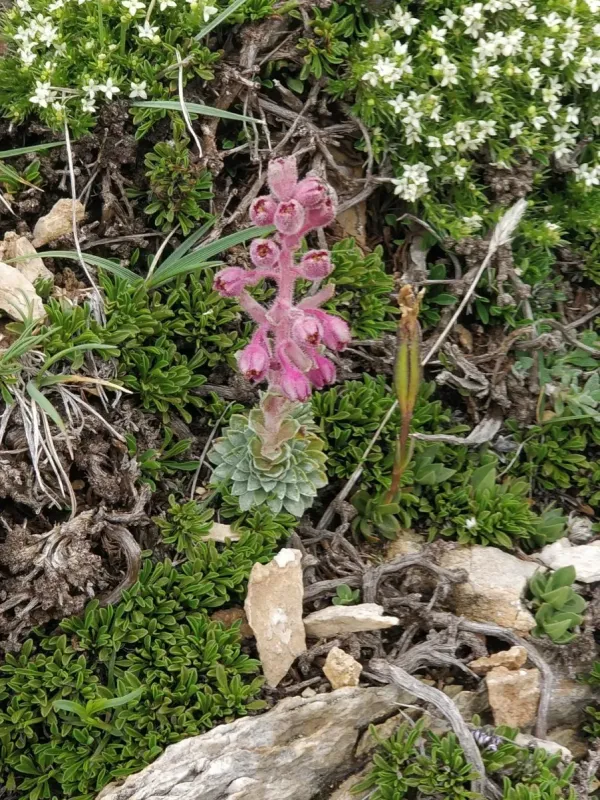
The plant is characterized by its tight, basal rosettes of rigid, lanceolate leaves, often margined with white calcareous deposits. During the blooming season, it produces a distinct inflorescence on a sturdy stalk, showcasing small, attractive red or pink flowers that stand out against the grey stone habitat.
For successful cultivation, the plant requires excellent drainage, mimicking its native scree slopes. It prefers bright, indirect light and a climate that avoids extreme heat or excessive humidity. A site with a north-facing aspect can be beneficial in warmer gardening zones.
Soil composition is critical for this species. It demands a gritty, alkaline substrate. Gardeners should incorporate limestone chippings, coarse sand, and a small amount of loam, ensuring that the pH level remains neutral to slightly alkaline to support healthy root development.
In gardening and horticulture, Saxifraga media is primarily used as an ornamental specimen in rock gardens, troughs, or alpine houses. Its architectural form makes it a sought-after plant for enthusiasts specializing in rare mountain flora.
Main diseases and pests
The primary threat to the health of Saxifraga media is crown rot, triggered by stagnant moisture around the base of the rosette. During wet winters or periods of high rainfall, it is essential to protect the plant from excessive saturation.
Fungal diseases thrive in poorly ventilated environments. To prevent these infections, practitioners should ensure adequate airflow and mulch the area around the plant with fine gravel, which keeps the foliage lifted away from moist soil.
Pests such as snails and slugs can be highly destructive, frequently grazing on the fleshy leaves. Regular monitoring and the application of physical barriers are effective strategies for managing these populations in an alpine garden.
Spider mites may occur during hot, dry spells if the plant is under stress, especially in containers or closed environments. Maintaining a stable temperature and humidity level helps to prevent such infestations.
Overall, Saxifraga media is a resilient species when provided with its specific habitat requirements. A well-drained, lime-rich environment and careful attention to moisture management are the cornerstones of successful cultivation.