
Saxifraga marginata
Saxifraga marginata
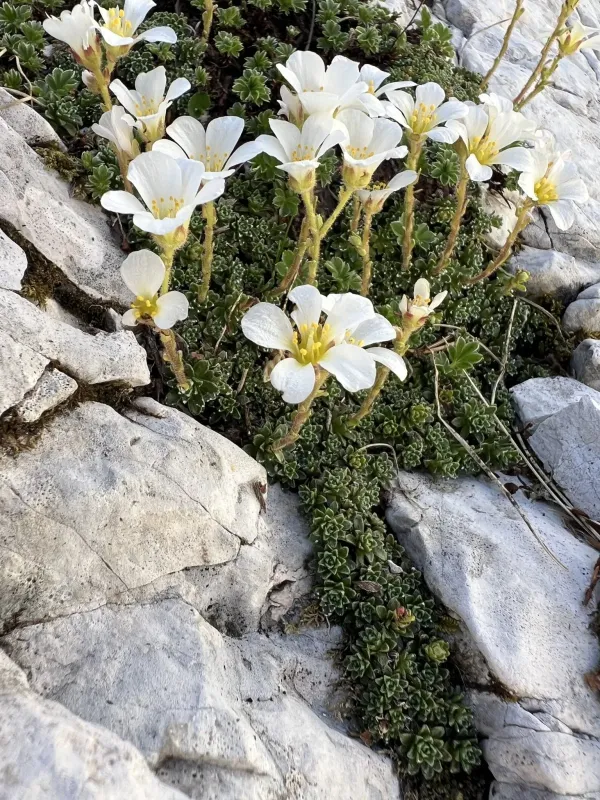
Description
Sowing dates
The propagation of Saxifraga marginata is typically initiated by seeds sown in early spring or late winter. Due to their minute size, the seeds should be surface-sown on a moist, well-draining substrate and lightly pressed to ensure contact without being buried.
A period of cold stratification is essential for breaking seed dormancy. Keeping the seed trays in a cold frame or a refrigerator for approximately 4 to 6 weeks significantly improves germination rates once temperatures rise to an optimal 15–20°C.
Seedlings develop very slowly and require constant attention to maintain adequate humidity without creating waterlogged conditions. Using a thin layer of fine grit over the soil can help support the tiny seedlings and prevent them from collapsing.
Vegetative propagation via division of rosettes is a reliable method for multiplying established plants. This procedure is best performed immediately after the flowering season to allow the new divisions sufficient time to root before the heat of summer.
When transplanting, ensure that the crown of the plant is placed level with the soil surface. Deep planting often leads to stem rot, which can quickly destroy the entire rosette structure.
Growing requirements
Saxifraga marginata, a member of the Saxifragaceae family, is a perennial alpine species originating from limestone cliffs in the Apennines and Balkans. It is highly adapted to nutrient-poor, rocky environments and thrives in craggy, exposed locations.
The primary requirement for successful cultivation is exceptional drainage. A gritty, lime-rich soil mix is highly recommended to simulate its natural habitat. Heavy clays should be strictly avoided as they retain moisture that causes root damage.
This species requires full sun to maintain its compact, dense rosette form. In regions with intense afternoon summer sun, light shading during the hottest part of the day can help prevent leaf scorch and heat stress.
Watering should be precise and moderate; water should ideally be applied to the soil surrounding the plant rather than directly over the foliage. This prevents water from becoming trapped in the center of the rosette, which is a common cause of fungal decay.
Soil pH should ideally be neutral or slightly alkaline. In acidic garden soils, the addition of limestone chippings is necessary to provide the calcium carbonate the plant needs for healthy development.
Main diseases and pests
The most significant threat to Saxifraga marginata is crown rot, often triggered by excessive humidity and stagnant air. Keeping the plant in a position with good natural ventilation is crucial for minimizing disease pressure.
Aphids can infest the plant during the early stages of growth, specifically targeting the flower stalks and young rosettes. Mechanical removal or mild insecticidal soap sprays are usually sufficient to control these minor infestations.
Slugs and snails present a seasonal risk, especially during spring months when new growth is tender. Physical barriers like coarse gravel or copper tape can be effective in preventing damage to the dense leaves.
Fungal leaf spot diseases can occur if the plant is subjected to poor air circulation. Regular monitoring and removing any dead or decaying foliage from the base of the plant help to reduce the risk of secondary infections.
Maintaining a dry, gritty surface layer around the foliage is a key agronomic practice to protect the plants from soil-borne pathogens. This dry interface is the most effective preventative measure for long-term health.