
Madeira saxifrage
Saxifraga maderensis
Description
Sowing dates
Propagating the Madeira saxifrage (Saxifraga maderensis) is best achieved via seeds or offsets taken from mature parent plants. Seeds should be sown in late winter within a sandy, fast-draining medium.
Seeds require light for germination and should be sown on the surface of the compost without being buried. Maintaining constant moisture via a fine mist spray is essential for successful germination.
Once seedlings have developed their first true leaves, they should be carefully pricked out into small pots. Using a high percentage of grit in the potting mix ensures the development of healthy, robust root systems.
Vegetative propagation by dividing rosettes is highly effective. This method allows for the maintenance of specific genetic traits and provides stronger plants that establish themselves more quickly in garden conditions.
Transplanting into the permanent garden site should occur after the final frost. The plants need a settling-in period with light shade before they can withstand full, indirect sunlight.
Growing requirements
The Madeira saxifrage belongs to the Saxifragaceae family. This succulent perennial is endemic to the rocky landscapes of Madeira and is well-adapted to high-altitude, craggy environments.
This species thrives in cool, moist climates with excellent air circulation. In cultivation, it performs exceptionally well in rock gardens or alpine troughs where the roots can access moisture without being waterlogged.
The soil must be extremely well-draining, mimicking the scree slopes of its origin. A mix of loam, leaf mould, and plenty of grit or pumice is considered the gold standard for long-term health.
Regular but moderate watering is necessary during the active growing season. However, during the winter months, the plant must be kept drier to prevent the rot that is common in dormant rosettes.
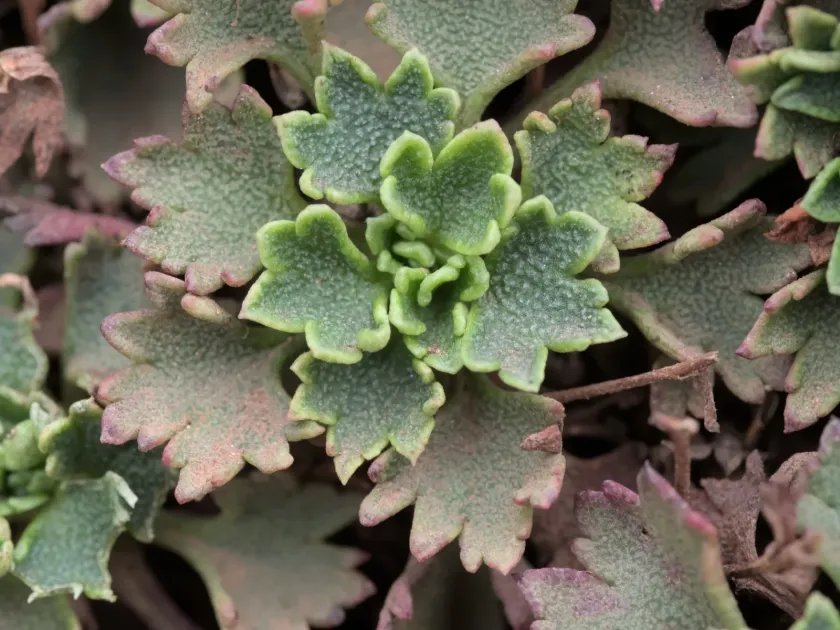
Botanically, it features succulent, tightly packed rosettes and delicate flowering stalks. It is highly valued by horticulturists for its architectural foliage and clean, elegant white flowers.
Main diseases and pests
Fungal diseases are the primary threat to the Madeira saxifrage, specifically root rot and Botrytis, which can thrive if the foliage remains constantly damp in stagnant air conditions.
Red spider mites are frequent pests in drier greenhouse or garden environments. They feed on the succulent leaves, causing them to lose their vibrant green color and eventually wither.
Aphids can be problematic, especially on the soft, emerging flower spikes. If left untreated, they can cause significant stunted growth and compromise the plant's seasonal blooming.
Gastropods, such as slugs and snails, are attracted to the succulent tissue of the rosettes. In professional settings, barrier tapes or natural deterrents are used to prevent grazing damage.
- Maintain optimal spacing for air movement.
- Use systemic fungicides only when infestation is confirmed.
- Ensure a strictly gritty top-dressing around the plant base.