
Yellow-green saxifrage
Saxifraga luteoviridis
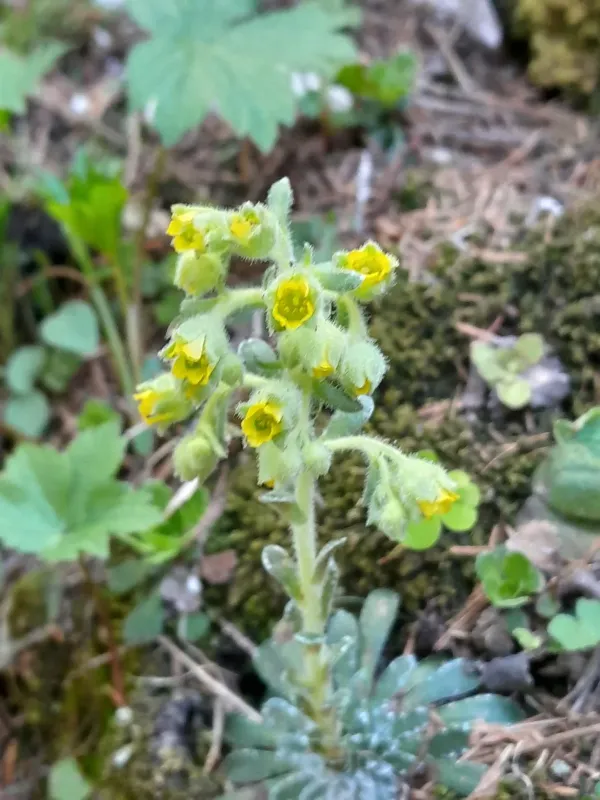
Description
Sowing dates
Propagation of the yellow-green saxifrage is effectively carried out through seed sowing or the vegetative division of established rosette clusters.
It is recommended to sow seeds in early spring, ensuring a period of cold stratification to break dormancy and encourage uniform germination.
When transplanting into the open ground, young plants require careful acclimatization to prevent transplant shock in harsh environmental conditions.
Surface sowing is critical for this species, as the seeds require sufficient light exposure and should not be buried deep within the substrate.
Dividing mature plants is best performed immediately following the flowering season to allow the roots to establish before the onset of winter.
Growing requirements
This species belongs to the Saxifragaceae family and is recognized as a hardy perennial adapted to rocky mountain habitats.
The culture thrives in well-drained, lime-rich soils, which prevent the root system from remaining overly damp for extended periods.
Site selection should prioritize areas with partial shade or exposure to cool, mountain-like air flows, mimicking its native natural environment.
The plant is sensitive to high heat and stagnant air, which can negatively affect its physiological processes and overall vigor during summer.
- Installation of a gravel mulch layer to keep foliage away from moist soil.
- Moderate irrigation schedules that focus on moisture regulation rather than soaking.
- Avoidance of over-fertilization, as the species prefers lean, mineral-based soil conditions.
Main diseases and pests
The primary threats to this plant are fungal pathogens triggered by poor air circulation or excessive moisture around the base of the rosettes.
Root rot often occurs if the soil composition is too compact or if irrigation is applied directly over the heart of the leaf rosettes.
Slugs and snails can cause significant damage to the succulent leaves, often appearing after rainy periods when the plant is most vulnerable.
In indoor or greenhouse settings, spider mites may become a concern if temperatures rise significantly and humidity levels remain low.
Regular monitoring and the removal of yellowing or decaying lower leaves help reduce the risk of secondary infections and pest colonization.