
Kotschy's Saxifrage
Saxifraga kotschyi
Description
Growing requirements
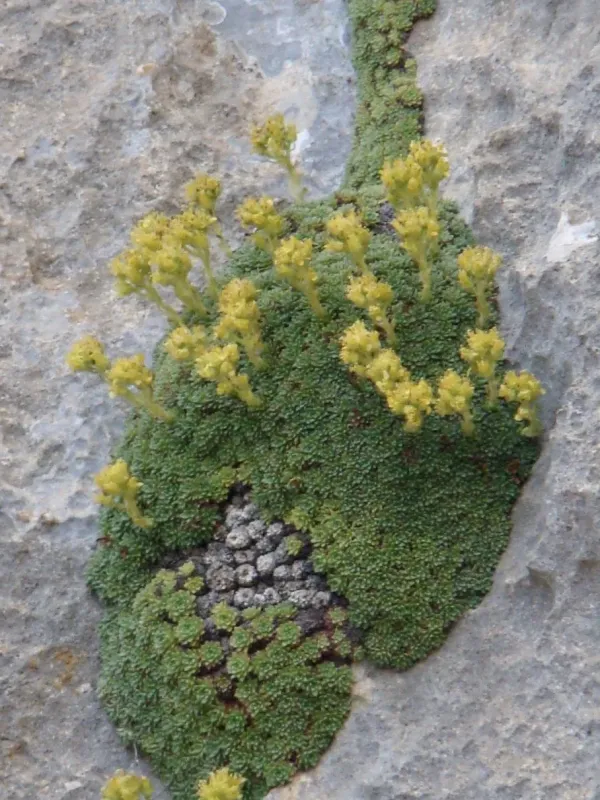
Kotschy's Saxifrage (Saxifraga kotschyi) is a distinctive perennial plant belonging to the Saxifragaceae family. This species originates from the high-altitude mountainous regions of the Balkans and Asia Minor, where it thrives in harsh, rocky environments.
Botanically, it is classified as a cushion-forming herb. It produces dense, low-growing mats of small, evergreen rosettes that act as a foundation for its bright yellow flowers, which emerge on short stalks during the early spring months.
To cultivate this species successfully, one must replicate its native alpine conditions. The soil must be exceptionally well-draining, consisting of a gritty, mineral-rich mixture. The plant is highly intolerant of waterlogged soil, which quickly leads to root decay.
Ideal placement includes sunny or semi-shaded locations, such as rock gardens, crevices, or alpine screes. Protection from excessive heat and humidity during the summer is necessary to ensure the plant's survival and continued aesthetic appeal.
In ornamental horticulture, Kotschy's Saxifrage is highly regarded for its compact growth habit and hardiness. It serves as an excellent groundcover for rockery projects, contributing to a sustainable and low-maintenance landscape design.
Main diseases and pests
The primary threats to this plant involve fungal pathogens, particularly root rot, which are triggered by poor air circulation or excessive moisture. Ensuring that the crown of the plant remains dry at all times is crucial for long-term health.
Pests such as aphids and spider mites can occasionally damage the foliage and flowers. Gardeners should monitor the plants regularly, particularly during periods of rapid growth, and implement integrated pest management practices if necessary.
Preventative measures against disease center on the use of gravel or stone chippings for mulching. By surrounding the base of the rosettes with non-organic material, you effectively keep the foliage away from soil-borne pathogens and excess moisture.
Powdery mildew may appear if the plants are placed in stagnant, humid environments. Maintaining adequate spacing between individual plants and choosing locations with natural breeze can significantly mitigate this risk without the need for chemical intervention.
Periodic maintenance, including the division of overgrown mats, helps keep the population vigorous. By preventing overcrowding, the gardener ensures that light and air reach all parts of the cushion, thereby reducing the chances of pest infestation and disease spread.