
Saxifraga khiakhensis
Saxifraga khiakhensis
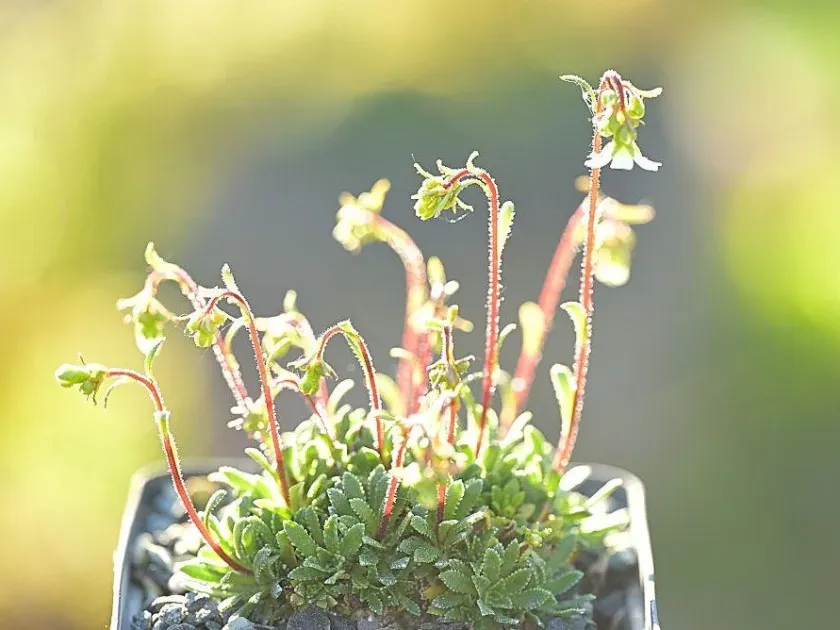
Description
Sowing dates
Saxifraga khiakhensis is a rare perennial species belonging to the Saxifragaceae family, native to high-altitude stony environments. Propagation is primarily achieved through seeds, which require specific stratification periods to break dormancy before germination can occur.
For cultivation, seeds are sown onto a substrate consisting of fine gravel, sand, and minimal potting soil. Surface sowing is recommended, as the seeds are extremely small and need access to indirect light to trigger the sprouting process effectively.
Once seedlings develop their first true leaves, they must be transplanted into individual small pots. This requires careful handling, as the root system of this species is highly sensitive and prone to damage during the transplanting phase.
The optimal time for establishing the plants in a permanent location is during the early spring or autumn. This timing allows the plants to establish a root system before the onset of extreme seasonal temperatures, whether winter frost or summer heat.
Vegetative propagation via division is occasionally used for mature specimens. However, this practice is reserved for vigorous plants and must be performed with extreme care to avoid inducing shock or bacterial rot in the cut tissues.
Growing requirements
This crop has highly specific environmental requirements, mimicking its natural rocky habitat. It thrives in well-draining, mineral-rich soils that have a neutral or slightly alkaline pH level to support its physiological needs.
Adequate sunlight is essential for maintaining the plant's characteristic compact growth form. While the plant loves open, sunny exposures, it benefits from light afternoon shade in lowland climates to prevent leaf scorching during peak heat hours.
Water management is the most critical aspect of the plant's agronomy. The soil must never remain waterlogged; excessive moisture quickly leads to root crown decay. A drainage layer beneath the root zone is mandatory for successful cultivation.
The plant demonstrates high cold tolerance, making it suitable for regions with harsh winters. During snowless winters, adding a layer of fine gravel mulch around the base provides necessary protection against dehydration and extreme frost cycles.
Competition from weeds is a major threat to this slow-growing species. Regular manual weeding is essential, but it must be performed with caution to avoid disturbing the shallow and delicate root structure of the Saxifraga.
Main diseases and pests
Fungal diseases related to root and crown rot are the primary threats to this species. These conditions are almost always induced by improper water management, poor soil aeration, or excessive atmospheric humidity around the foliage.
Spider mites can become an issue during hot, dry periods, potentially causing discoloration of the rosettes. Integrated pest management using organic soaps or mild miticides is recommended if an infestation is confirmed through regular monitoring.
Slugs and snails can cause significant damage by feeding on the leaves, especially in the early spring months. Physical barriers, such as sharp gravel or specialized molluscicide bait, are often used to protect the rosettes from herbivore damage.
Nutritional imbalances caused by over-fertilization can drastically reduce the plant's longevity. Excess nitrogen promotes rapid, soft growth that is more susceptible to both mechanical damage and disease outbreaks compared to naturally grown specimens.
Soil compaction is an underestimated threat that hinders gas exchange for the roots. Maintaining a top layer of grit or decorative stone mulch helps keep the soil surface porous and prevents the growth of moss that could choke the plant.