
Iraty Saxifrage
Saxifraga iratiana
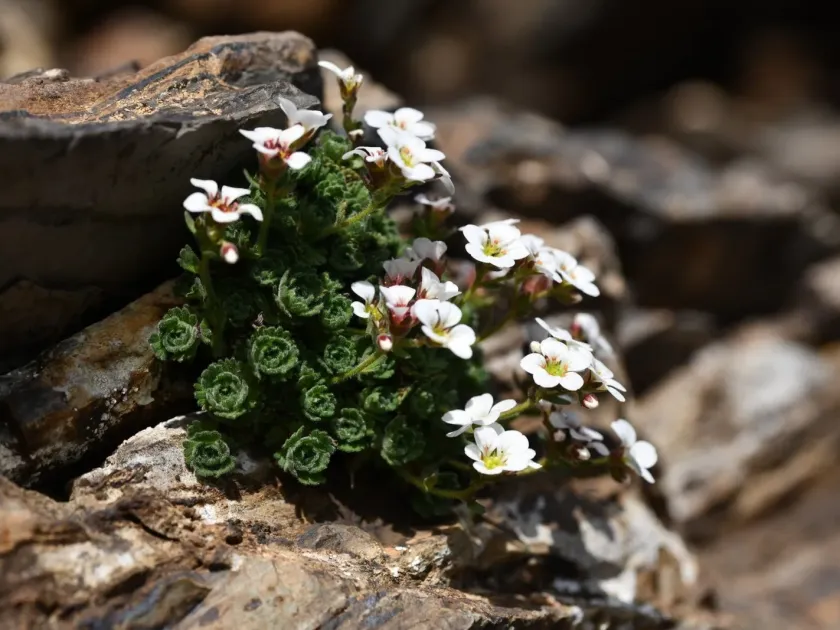
Description
Growing requirements
The Iraty Saxifrage (Saxifraga iratiana) is a perennial herbaceous plant belonging to the Saxifragaceae family. Native to the high-altitude regions of the Pyrenees, this species has adapted to extreme conditions by forming dense, cushion-like mats.
Botanically, the plant consists of tight rosettes of leathery, evergreen leaves. These rosettes allow the plant to withstand harsh winds and conserve moisture during the short growing season in alpine zones, rarely exceeding a few centimeters in height.
For successful cultivation, Iraty Saxifrage requires extremely well-drained, gritty, or rocky soils. It is highly intolerant of stagnant moisture, making an efficient drainage system at the planting site a fundamental requirement for gardeners.
The plant thrives in bright, sunny locations but benefits from light shade during the hottest parts of the day. In garden settings, it is ideal for rock crevices, scree slopes, or troughs that mimic its natural alpine habitat.
The primary use of Saxifraga iratiana is ornamental. It is a prized specimen for rock gardens, trough gardens, and alpine houses due to its neat structure and the delicate white flowers that appear during the spring season.
Main diseases and pests
Fungal diseases related to excessive humidity are the primary threat to the Iraty Saxifrage. If the crown of the plant remains damp for long periods, it is susceptible to rot, which can quickly destroy the entire cushion.
Pests such as spider mites may occur during periods of prolonged drought or high temperatures. Regular monitoring is encouraged, as these pests can cause significant damage to the sensitive leaf tissues if left unchecked.
Slugs and snails can also cause aesthetic damage, especially to the tender growth in spring. Using protective barriers or organic deterrents is a common and effective management strategy in rock gardens.
It is important to avoid nitrogen-rich fertilizers, which cause weak, succulent growth that is more prone to disease and winter damage. Mineral-based fertilizers should be used sparingly, if at all.
Proper airflow is essential for disease prevention. Ensuring that the foliage does not stay covered with organic debris or trapped moisture is the key to maintaining healthy plants throughout the year.