
Ivy-leaved saxifrage
Saxifraga hederacea
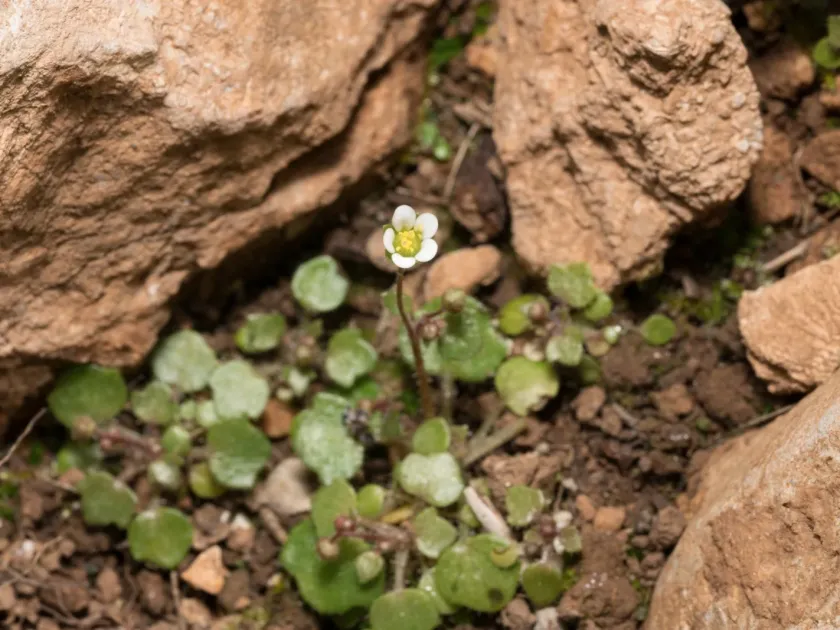
Description
Sowing dates
Sowing seeds of Saxifraga hederacea is best performed in early spring or late autumn, allowing the seeds to undergo natural stratification for better germination.
The seeds are extremely fine and should be sown onto the surface of a fine, well-drained compost without being covered by soil layers.
Maintain high humidity levels during the germination period by using a glass or plastic cover over the seed tray to ensure consistent moisture.
Seedlings should be kept in a bright, cool place to prevent them from becoming leggy, which is a common issue for many saxifrage species.
Once the seedlings are large enough to handle, they should be transplanted into individual small pots before being moved to their final outdoor location.
Growing requirements
The ivy-leaved saxifrage is a member of the Saxifragaceae family, naturally occurring in rocky Mediterranean environments and moist mountain crevices.
The plant thrives in cool, shady locations, making it an excellent choice for rockeries, walls, or shaded containers where it can form lush mats.
The ideal soil should be gritty and alkaline, providing excellent drainage to prevent the root system from sitting in water, which leads to rapid decay.
Watering must be balanced; the soil should be kept moist but never waterlogged, particularly during the active growing season in the spring and summer.
Regular maintenance involves removing dead leaves and ensuring the plant remains free from suffocating weeds or aggressive moss growth in its immediate vicinity.
Main diseases and pests
Root rot is the most significant threat to this species, usually caused by poor drainage or overwatering, which quickly compromises the health of the plant.
Powdery mildew can occur during periods of high humidity and poor air circulation, requiring prompt action such as thinning the planting or using fungicides.
Aphids frequently target the new succulent growth, potentially spreading viral infections that can lead to stunted development and leaf distortion.
Snails and slugs are extremely attracted to the soft foliage of the ivy-leaved saxifrage and can devour significant portions of the plant overnight.
Environmental stress, such as extreme heat and direct afternoon sun, can predispose the plant to various opportunistic fungal pathogens and insect pests.