
Saxifraga hariotii
Saxifraga hariotii
Description
Growing requirements
Saxifraga hariotii belongs to the Saxifragaceae family and is a resilient perennial plant native to the Pyrenees. It has evolved to thrive in high-altitude rocky environments, which is the primary factor influencing its unique growth habits and environmental demands.
To successfully cultivate this species, one must prioritize a well-drained substrate. The plant is highly intolerant of waterlogged soil, meaning that gardeners should create a mix rich in grit, sand, and limestone chippings to replicate its natural alpine habitat conditions.
The climate requirements for Saxifraga hariotii focus on cool temperatures and adequate air circulation. While it enjoys a bright environment, direct, scorching sun during mid-day should be avoided to prevent thermal stress and subsequent dehydration of the foliage.
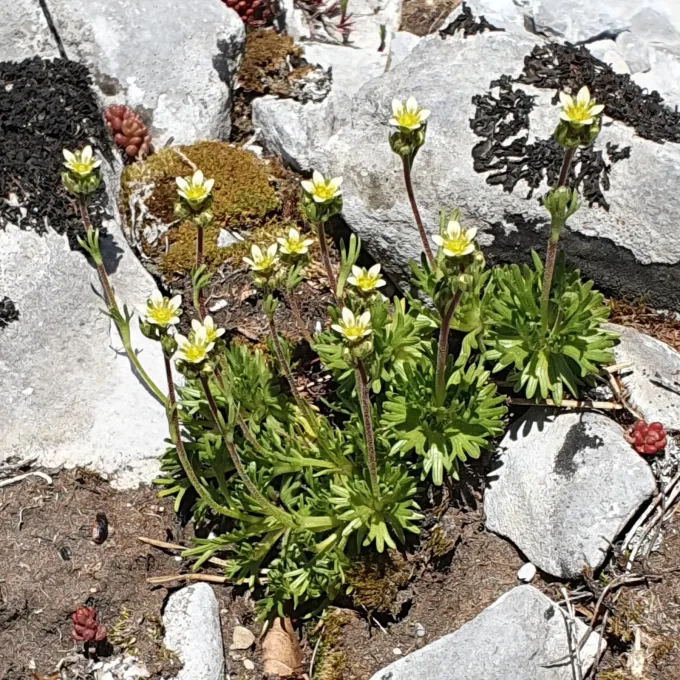
Botanically, it features a characteristic cushion-forming habit. The rosettes are tightly packed, and the foliage is often leathery or glandular, which helps the plant store water efficiently and resist the harsh winds typically found at high altitudes.
Propagation is generally performed via division or cuttings taken from the rosettes in late spring. It is a slow-growing culture, so patience is required during the initial establishment period to allow the root system to adapt to the new garden soil structure.
Main diseases and pests
Fungal pathogens represent the most significant threat to Saxifraga hariotii, particularly crown rot caused by poor soil drainage. If the center of the cushion remains damp for extended periods, the plant can succumb to decay within a short timeframe.
Pests such as spider mites and mealybugs can pose a threat by colonizing the dense rosettes. Regular monitoring is essential, as these pests often hide deep within the cushion structure where they are shielded from casual observation and external contact.
In outdoor garden settings, gastropods like slugs and snails may graze on the foliage. Protecting the plants with physical barriers or targeted molluscicides is a standard part of maintenance, especially during the humid spring months when these pests are most active.
Maintaining hygiene in the growing area is crucial for disease prevention. Removing dead leaves and debris from the base of the cushions improves airflow and reduces the probability of botrytis or other fungal infections taking hold during wet seasons.
Over-fertilization should be strictly avoided. Excess nitrogen encourages lush, soft growth that is more susceptible to insect attack and winter damage. A lean soil regime is far more beneficial for maintaining the plant's natural, compact, and robust appearance.