
Saxifraga haenseleri
Saxifraga haenseleri
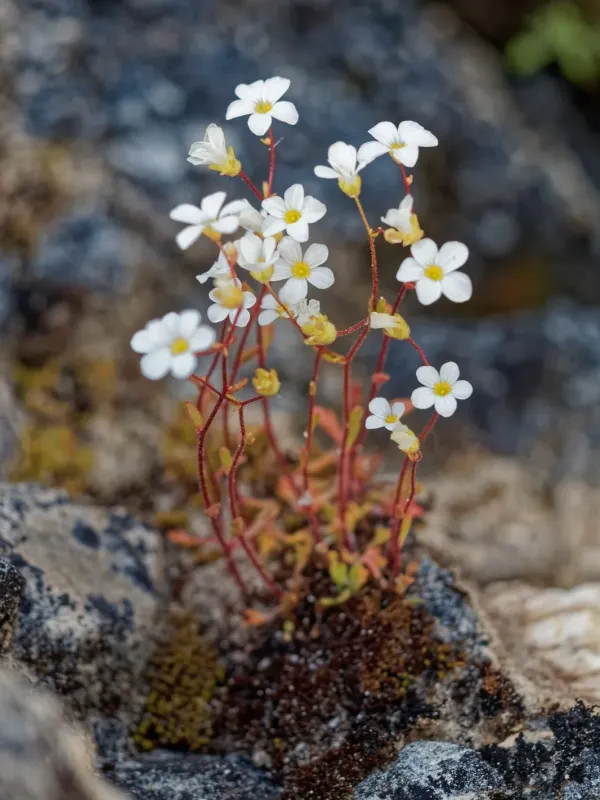
Description
Sowing dates
Saxifraga haenseleri is a distinctive perennial belonging to the Saxifragaceae family, known for its compact growth habit and suitability for alpine environments.
Propagation is typically achieved via seeds, which should be sown in late winter or early spring using a well-draining, gritty seed-starting medium.
Seeds should not be deeply buried; pressing them gently into the surface allows for better germination rates and avoids issues with seed rot.
Cold stratification is highly recommended to mimic natural alpine conditions and break seed dormancy, ensuring more uniform seedling development.
Once seedlings have matured enough to handle, they are transplanted into individual pots or directly into a rock garden site with excellent drainage.
Growing requirements
Native to the mountainous regions of Spain, this species thrives in sites that replicate its natural rocky habitat and exposure to plenty of light.
The soil must be exceptionally porous, ideally a mixture of grit, sand, and lean compost, to ensure that moisture does not accumulate around the crown.
Full sun to light shade is preferred; in extremely hot climates, some protection from intense afternoon sun can prevent leaf scorch and stress.
Watering should be done with caution, focusing on the root zone rather than the foliage to prevent fungal issues and excessive humidity buildup.
This plant is best utilized in rockeries, crevices, or alpine troughs, where the structure of the landscaping inherently supports the plant's drainage needs.
Main diseases and pests
Root rot is the most common threat to Saxifraga haenseleri, usually caused by stagnant moisture, heavy soils, or poor winter drainage conditions.
Preventative measures include top-dressing the plant base with small stones or gravel, which helps to keep the foliage dry and improves air circulation.
Pests such as spider mites may become an issue during prolonged dry spells, leading to yellowing or stunted growth if the plant's health is compromised.
Regular inspections of the foliage allow for early detection of potential threats, enabling the gardener to apply targeted treatments or adjust water levels.
Maintaining a clean garden environment by removing debris around the plants helps to minimize the spread of soil-borne pathogens and fungal spores.