
Saxifraga globulifera
Saxifraga globulifera
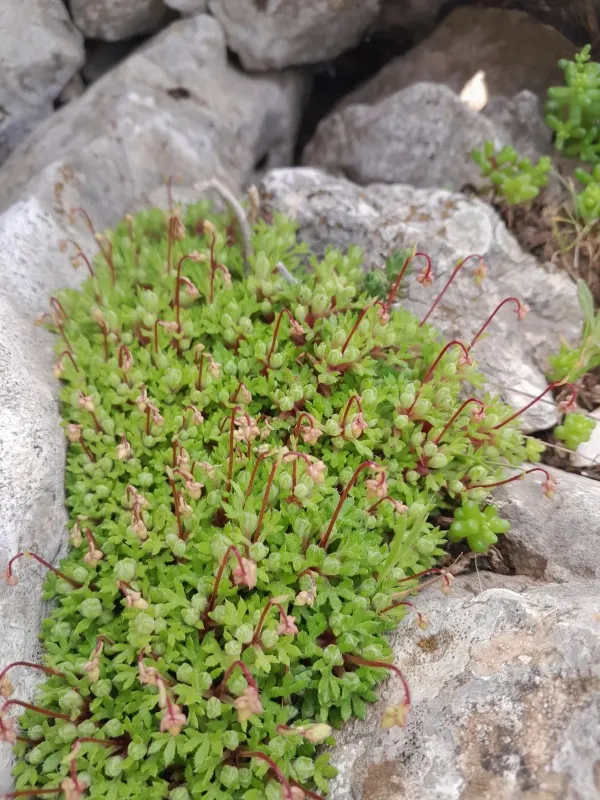
Description
Sowing dates
Saxifraga globulifera belongs to the Saxifragaceae family. Propagation is typically achieved through seeds sown in late winter or early spring in a protected environment like a greenhouse or a sunny windowsill.
The seeds are minute and require surface sowing. They should be pressed gently into a light, well-draining germination mix without being buried, as light is beneficial for the germination process.
Cold stratification is highly recommended to break seed dormancy. Placing the seed trays in a cool environment for several weeks significantly improves the overall germination rate.
Once the seedlings develop their first true leaves, they should be carefully pricked out into small pots to prevent overcrowding and to allow individual root systems to develop properly.
Transplanting to the permanent location in a rock garden or alpine bed should occur only after the risk of severe frost has completely passed, ensuring the plants are sufficiently hardened off.
Growing requirements
This species thrives in bright, sunny locations, though in regions with scorching summers, partial shade during the hottest part of the day is recommended to prevent leaf scorch.
Soil structure is paramount; the substrate must be highly porous, stony, or sandy. Excellent drainage is non-negotiable, as waterlogged soil leads to rapid crown and root rot.
The ideal soil pH is neutral to slightly alkaline. Incorporating crushed limestone or gravel into the planting medium helps replicate the plant's natural rocky, high-altitude environment.
Watering requirements are moderate. During the growing season, keep the soil slightly moist but never saturated. Always water the soil around the plant rather than the foliage.
Good air circulation is essential for the health of Saxifraga globulifera. Planting in clusters that are too dense may lead to stagnant air, encouraging fungal pathogens.
Main diseases and pests
The most common threats involve fungal infections, particularly root rot, which is triggered by excessive moisture and poor soil aeration. These pathogens can kill the plant quickly.
Pests such as aphids and spider mites can occasionally infest the plants. These pests weaken the growth by extracting sap from the tender rosettes, leading to stunted foliage.
Slugs and snails are major threats, especially in humid or rainy climates. They consume the leaves, leaving unsightly holes and damaging the structural integrity of the plant.
Proactive disease management includes avoiding overhead watering and ensuring that the base of the plant is surrounded by a layer of coarse grit or gravel to prevent direct contact with soil moisture.
Regular monitoring of the garden bed is necessary to detect early signs of infestation. Manual removal of pests or the use of approved horticultural soaps is effective if the damage is detected early.