
Kidney saxifrage
Saxifraga geum
Description
Sowing dates
Kidney saxifrage seeds should be sown in late winter or early spring using a shallow tray or seed pan. A seed-starting mix with excellent drainage is essential to prevent damping-off disease in young seedlings.
The seeds are tiny and require light to germinate, so they should be surface-sown without covering them with soil. Gently press the seeds into the substrate and mist with water to ensure good contact.
Keep the sowing tray in a cool, bright location, ideally at temperatures between 15°C and 18°C. Germination is usually slow and can take up to a month before the first leaves appear.
Once the seedlings are large enough to handle, transplant them into individual pots to allow better root development. Gradually harden them off before planting into their final outdoor position.
Propagation can also be easily achieved by dividing established clumps in spring. This method ensures that the new plants are identical to the parent, preserving specific leaf patterns.
Growing requirements
Saxifraga geum, commonly known as Kidney saxifrage, is a perennial plant in the Saxifragaceae family. It is native to the mountainous regions of Western Europe, particularly Ireland and the Pyrenees.
This species thrives in cool, moist, and shady environments, making it an excellent choice for north-facing rock gardens. It prefers soil that is rich in organic matter but well-drained, as it cannot tolerate waterlogging.
In terms of moisture, it requires consistent watering during dry spells to keep the root zone damp. However, it is vital to avoid wetting the leaves excessively to prevent rot.
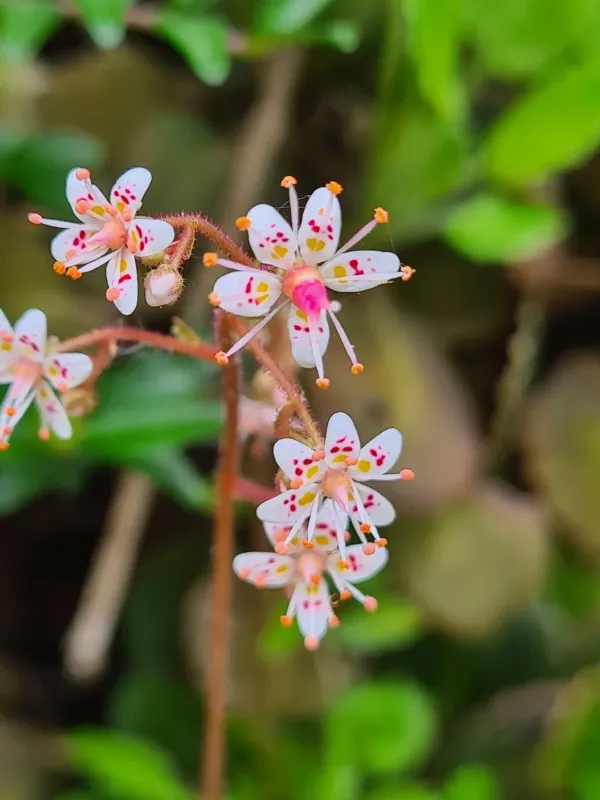
The plant grows in low rosettes of rounded, scalloped leaves, which remain attractive throughout the growing season. It produces slender stalks topped with small white or pinkish-white flowers.
To ensure winter survival, a light layer of mulch around the base of the plant can provide necessary protection against extreme temperature fluctuations in colder climates.
Main diseases and pests
Root rot is the most significant threat to Kidney saxifrage, usually caused by heavy, compacted soil or poor drainage during wet winter months. Improving soil structure is the best preventive measure.
Slugs and snails are common pests that feed on the succulent foliage of the plant. Using physical barriers like crushed eggshells or copper tape around the planting area can help deter these mollusks.
Aphids may occasionally infest the flower spikes. An insecticidal soap or neem oil spray is often sufficient to control these pests without damaging the plant's delicate tissues.
Fungal leaf spots can occur when the plant is grown in areas with poor ventilation. Ensuring there is enough space between plants allows for better air movement and reduces the risk of infection.
If the plant appears stunted, check for signs of root-knot nematodes in the soil. If infestation is confirmed, it is best to remove and dispose of the affected plant and replace the soil in that spot.