
Fragoso saxifrage
Saxifraga fragosoi
Description
Growing requirements
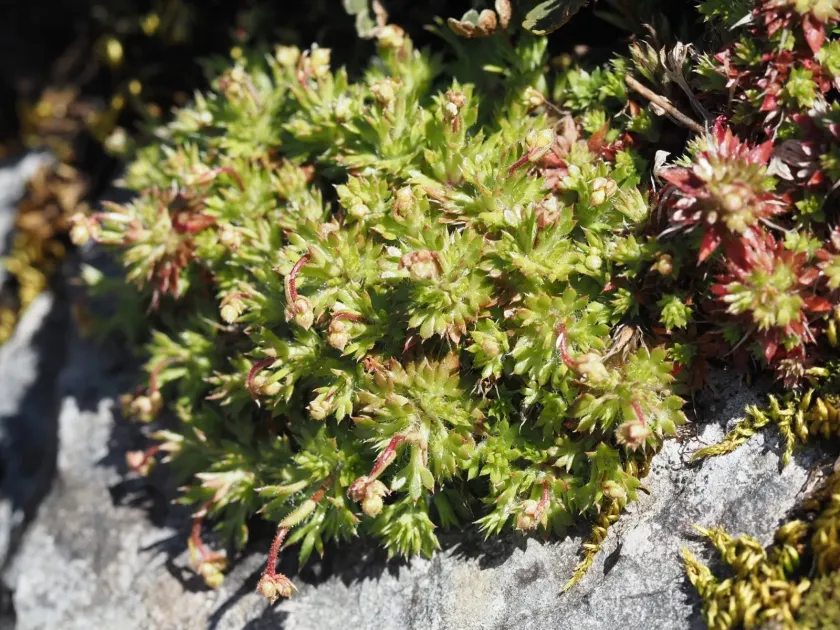
Fragoso saxifrage (lat. Saxifraga fragosoi) is a perennial plant belonging to the Saxifragaceae family. This species is endemic to specific mountainous regions of the Iberian Peninsula, thriving in harsh rocky environments.
The plant is distinguished by its cushion-forming growth habit. Small, densely packed leaves are arranged in rosettes that provide excellent ground cover and are highly valued in rock garden design.
Regarding soil, this culture demands excellent drainage. It performs best in gritty, alkaline, or neutral substrates that mimic the natural rocky crevices found in its native habitat.
Climatic requirements involve cool to moderate temperatures. While it is hardy, the plant requires protection from extreme summer heat and direct midday sun, which can cause scorching of the foliage.
Proper water management is critical for this species. It should be watered sparingly, ensuring that the soil surface dries out between applications to prevent rot, particularly during the dormant season.
Main diseases and pests
The primary threats to Fragoso saxifrage are fungal infections, specifically root rot (Pythium and Phytophthora species), which occur when soil drainage is insufficient or air circulation is poor.
Pests such as spider mites can infest the rosettes during periods of low humidity. These pests feed on cell sap, leading to stunted growth and discolored, withered leaves that significantly impact the plant's aesthetic.
Aphids can occasionally colonize the flower stalks during the blooming period. While rarely fatal, they can weaken the plant and serve as vectors for secondary viral infections.
Gastropods like snails and slugs are frequent visitors in damp environments. They can consume the entire succulent-like rosette overnight, requiring physical barriers like crushed shells or copper tape for effective control.
Regular maintenance, including the removal of dead foliage and debris, is essential to minimize the risk of pest infestation and disease outbreaks in a professional or private garden setting.