
Fragile saxifrage
Saxifraga fragilis
Description
Growing requirements
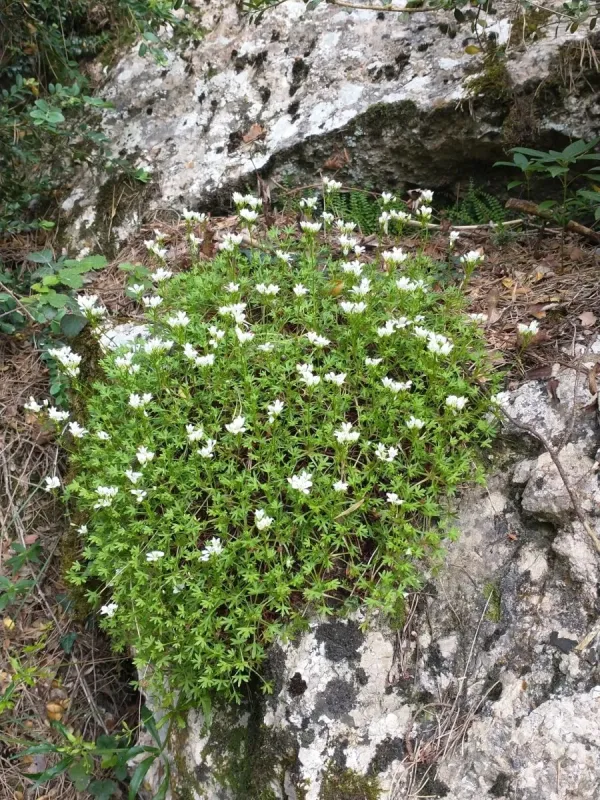
Fragile saxifrage (Saxifraga fragilis) is a perennial plant belonging to the Saxifragaceae family. Native to the limestone rocky habitats of Europe, it is well-adapted to life in crevices, making it an excellent candidate for specialized rock gardens and troughs.
This species requires a site with bright light exposure, ideally in an east-facing position. While it thrives in sunshine, it benefits from afternoon shade in warmer regions to prevent the foliage from scorching during peak summer temperatures.
The growing medium must be exceptionally well-draining, mimicking the mineral-rich, stony scree of its native alpine environment. A mixture of gravel, sand, and a small portion of loam provides the stability and drainage necessary for the plant's health.
Hardy enough to withstand harsh winters, the plant's main requirement during the dormant season is protection from excess humidity. Planting on a slight slope or in a raised container ensures that melting snow and rainwater drain away efficiently.
Cultural maintenance involves minimal intervention, primarily focusing on keeping the area free of weeds that might compete for nutrients. Given its slow growth rate, the plant is best suited for spots where it will not be overtaken by faster-growing vegetation.
Main diseases and pests
The most common health issue for Saxifraga fragilis is root rot, which typically stems from poor drainage or excessive soil moisture. Once the roots begin to decay, the plant is difficult to recover, making prevention the best strategy.
Spider mites are potential pests during periods of high heat and low humidity. Their presence can be identified by fine webbing on the leaves; regular inspection and misting can help prevent their population from expanding.
Aphids can sometimes congregate on the flowering stems, extracting sap and weakening the plant. If infestation occurs, gentle cleaning or the application of insecticidal soaps is usually sufficient to manage the situation without chemical residues.
Fungal leaf spot diseases can emerge if air circulation around the plants is poor or if the foliage remains wet for extended periods. Ensuring good spacing and a gritty mulch layer around the crowns helps to keep the leaves dry.
Gastropods, particularly slugs, can cause localized damage to the fleshy rosettes. Using physical barriers, such as crushed stone or copper tape, around the planting area effectively prevents these mollusks from reaching the foliage.