
Leafy saxifrage
Saxifraga foliolosa
Description
Growing requirements
The leafy saxifrage, known as Saxifraga foliolosa, is a perennial flowering plant belonging to the Saxifragaceae family. This species is native to arctic and subarctic regions, primarily found in cold, damp habitats such as arctic tundra and stream banks.
The plant has evolved to survive in extreme environments, often growing in moist, gravelly soils where seasonal snowmelt ensures consistent water availability throughout the short arctic summer.
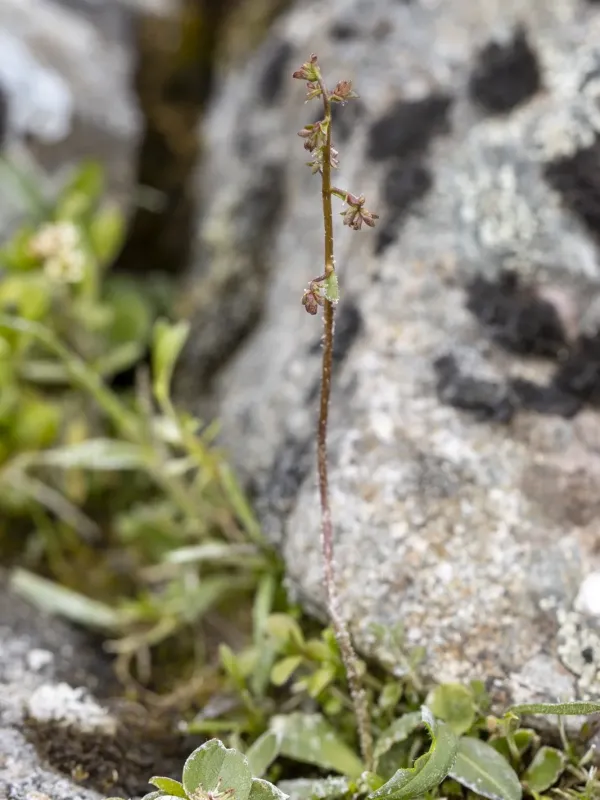
Botanically, it is distinguished by the production of bulbils on its inflorescences, a specialized adaptation allowing the plant to propagate vegetatively in years when the growing season is too short for seed development.
Cultivation requirements involve mimicking the arctic environment, specifically by providing consistent soil moisture, high light exposure, and cool ambient temperatures to prevent stress during development.
The species serves a key role in ecological studies of plant adaptation to extreme cold and is occasionally curated in botanical collections focusing on rare alpine and arctic flora.
Main diseases and pests
The leafy saxifrage is susceptible to various fungal pathogens that thrive in wet, stagnant conditions, particularly during the transition between winter dormancy and the growing season.
Root rot is a major threat in cultivation, usually triggered by poor drainage or excessive soil temperatures, which disrupt the plant's delicate metabolic processes.
While insect damage is generally low in its native arctic habitat, local populations can be affected by opportunistic pests in disturbed soil sites or less extreme southern microclimates.
Environmental changes, such as the drying of alpine wetlands due to shifting hydrological patterns, pose a significant risk to the natural survival of this species.
Competitive pressure from encroaching shrubs and grasses, driven by climate warming, threatens to reduce the available niche space for this low-growing arctic herb.