
Saxifraga ferdinandi-coburgi
Saxifraga ferdinandi-coburgi
Description
Growing requirements
Saxifraga ferdinandi-coburgi is a perennial plant belonging to the Saxifragaceae family. This species originates from the limestone mountainous regions of the Balkans, specifically endemic to parts of Bulgaria and Greece, where it thrives in rocky crevices.
The plant requires well-drained, gritty soil that mimics its natural alpine habitat. A substrate rich in limestone chippings or gravel is essential to ensure excellent drainage and an alkaline pH, which prevents root rot and promotes healthy foliage development.
In terms of light exposure, it prefers bright, indirect sunlight. While it is accustomed to harsh mountain conditions, exposure to scorching afternoon sun in lower altitudes can cause leaf scorch, necessitating a location with light shade during the warmest parts of the day.
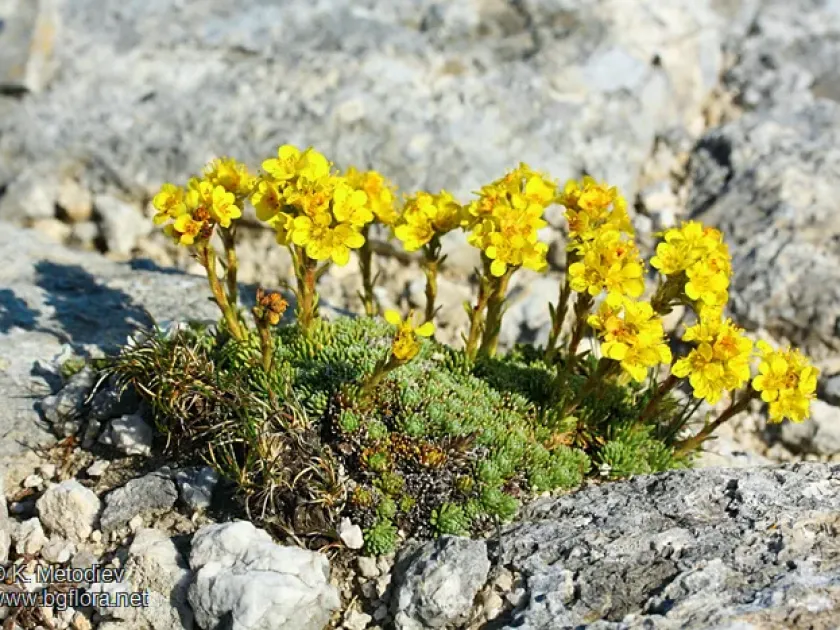
Botanically, it is characterized by forming dense, cushion-like rosettes of stiff, leathery leaves. This compact structure is a survival mechanism to minimize water loss and protect the plant from high-altitude winds, which also makes it highly desirable for rock garden aesthetics.
The main horticultural use of this species is in specialized rock gardens, crevice gardens, and alpine troughs. It is highly valued by collectors for its early spring bloom, which produces vibrant yellow flowers that contrast sharply with the tight green rosettes.
Main diseases and pests
The primary threat to Saxifraga ferdinandi-coburgi is excess moisture, particularly in winter. If the drainage is not perfect, moisture accumulates within the dense rosettes, quickly leading to crown rot and the decay of the entire cushion structure.
Pests such as aphids and spider mites can infest the rosettes, especially in dry, stagnant air conditions. Regular air circulation and careful monitoring are necessary to manage these threats and maintain the plant's structural integrity.