
Facchini's Saxifrage
Saxifraga facchinii
Description
Growing requirements
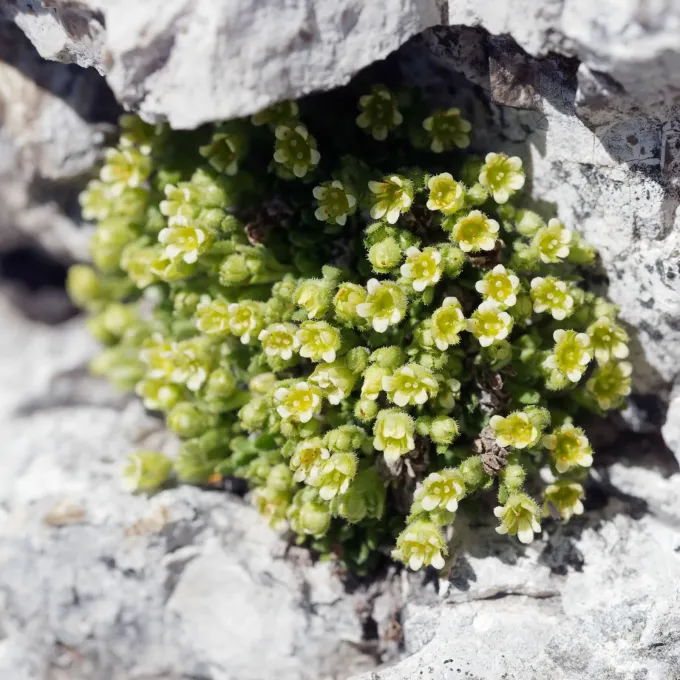
Facchini's Saxifrage (Saxifraga facchinii) is a perennial herbaceous plant from the Saxifragaceae family. This species is native to the high-altitude rocky slopes of the Dolomites in Italy, specifically growing in limestone crevices.
The plant exhibits a slow growth rate, forming dense, cushion-like mats. Its botanical structure includes small, tightly packed leaf rosettes that are perfectly adapted to the harsh conditions of high-altitude alpine zones.
Soil requirements for this species are specific: it demands a well-draining, gritty, and mineral-rich substrate. A mix containing limestone chippings or gravel is essential to mimic its natural calcareous habitat and prevent root rot.
Regarding climate, this plant thrives in areas with cool summers and high light intensity. It struggles in regions with high humidity or prolonged hot weather, making it a challenging species for gardeners in lower elevations.
In terms of agricultural and horticultural use, it is a prized species for specialized alpine gardens and crevice plantings. Its primary value lies in its aesthetic contribution to rockery displays and biodiversity in specialized collections.
Main diseases and pests
The most significant threat to Facchini's Saxifrage is fungal infection, typically caused by waterlogged soil. Poor drainage leads to root and crown rot, which can quickly devastate the dense cushions of the plant.
Excessive humidity in the air combined with warm temperatures can trigger physiological stress and invite pathogens. Maintaining a clean environment with good airflow is crucial for preventing disease outbreaks.
Common pests such as spider mites may occasionally affect the foliage, especially in dry and confined indoor or glasshouse conditions. Early detection and treatment with appropriate acaricides are recommended.
Slugs and snails represent a physical threat to the succulent leaves, particularly during damp spring periods. Protective barriers such as sharp grit or copper tape can be effective deterrents.
Proper water management is the key to preventing most threats. Avoiding overhead watering is vital, as moisture trapped within the rosettes encourages rot and fungal growth throughout the growing season.