
Saxifraga eudoxiana
Saxifraga eudoxiana
Description
Growing requirements
Saxifraga eudoxiana is a perennial herbaceous plant belonging to the Saxifragaceae family. Native to the mountain regions of the Balkans, it is specifically adapted to life in high-altitude environments and rocky crevices.
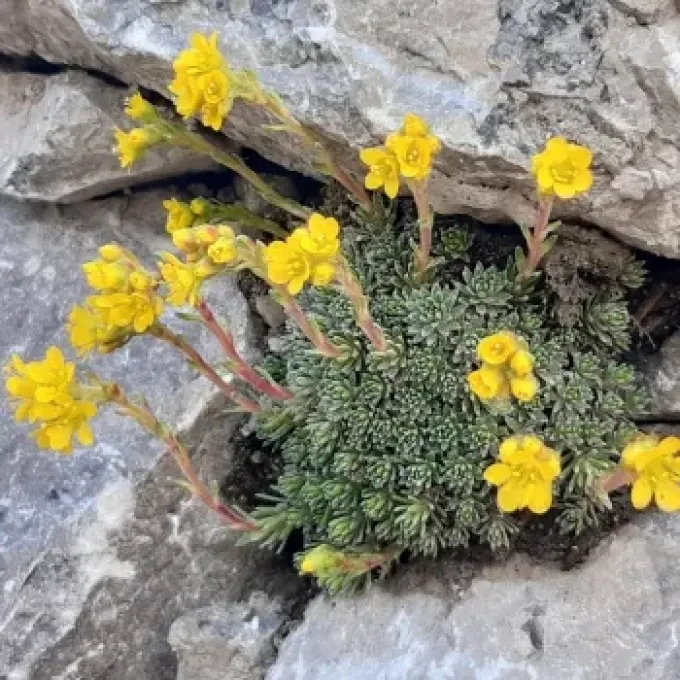
The plant is distinguished by its cushion-forming habit, consisting of dense, rosetted leaves that stay evergreen throughout most of the year. During the spring, it produces vibrant, yellow flowers on short stems, which are highly valued in horticultural design.
To cultivate this species successfully, one must replicate its natural rocky habitat. The soil should be gritty, well-draining, and ideally neutral to slightly alkaline, avoiding any heavy or clay-based substrates that retain water.
Requirements include full sun exposure, although in regions with extremely hot summers, partial shade during the hottest part of the day is recommended to prevent scorching the delicate foliage.
Maintenance involves minimal irrigation, as the plant is drought-tolerant once established. It is essential to ensure that water does not pool around the base of the rosettes to prevent tissue rot and ensure long-term health.
Main diseases and pests
The primary threat to Saxifraga eudoxiana is root rot, triggered by inadequate drainage or excessive rainfall during dormant periods. This fungal issue often leads to rapid deterioration of the plant's health.
Slugs and snails are the most significant pests, as they are attracted to the succulent-like leaves and can cause extensive damage to the plant's compact structure in a short period.
Aphids may also infest the flowering stems during the spring, which not only affects the aesthetic value but can also weaken the plant, making it more susceptible to other stressors.
To protect the plants, maintain a top dressing of gravel or stone chippings around the base, which helps keep the foliage dry and discourages slug migration toward the center of the rosettes.
Regular inspection is advised, particularly during wet weather, to identify and treat early signs of fungal infection or pest damage before they spread across the planting area.