
Saxifraga erioblasta
Saxifraga erioblasta
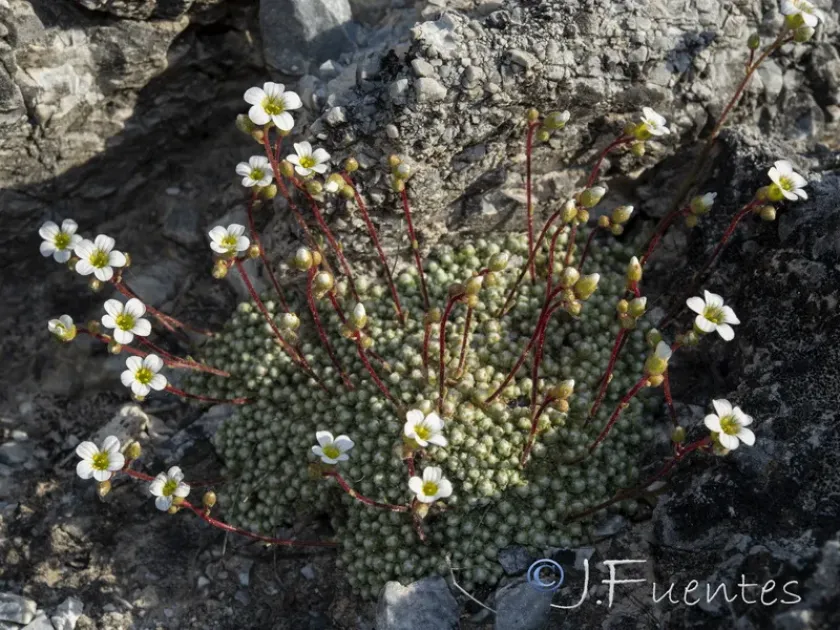
Description
Growing requirements
Saxifraga erioblasta is a distinctive perennial member of the Saxifragaceae family. Native to the limestone rock formations of southern Spain, it has evolved to thrive in high-altitude, rocky environments with excellent drainage.
The plant requires a specialized growing medium, typically consisting of crushed limestone, grit, and minimal organic matter, to mirror its natural habitat and ensure the roots do not sit in stagnant water.
It is classified as a drought-tolerant species, adapted to surviving on minimal water through its specialized silvery, hairy leaves that help reflect sunlight and reduce transpiration losses.
For optimal growth, provide a position in full sun to partial shade. In warmer climates, protecting the plant from the most intense afternoon heat is advisable to prevent tissue stress and maintain its compact, dense growth habit.
Cultivation should focus on creating an environment with superior airflow. Given its natural affinity for rock crevices, it is best suited for alpine houses, scree beds, or well-designed rock garden pockets.
Main diseases and pests
The most critical threat to Saxifraga erioblasta is fungal infection resulting from excessive soil moisture or high humidity coupled with poor air circulation around the rosettes.
Root rot is the primary cause of mortality in cultivation. Ensuring that the crown of the plant is kept dry by surrounding it with a layer of grit or sharp sand is essential for long-term survival.
Pests such as spider mites may occasionally infest the plants, particularly in dry, sheltered conditions. Regular monitoring of the foliage is necessary to detect early signs of infestation.
Slugs and snails can also pose a risk, as they are attracted to the foliage of many alpine species. Protective measures, such as copper bands or eco-friendly barriers, are recommended in damp environments.
Good hygiene in the garden, including the removal of dead leaves from the base of the plant, reduces the risk of pathogens and encourages vigorous, disease-free growth.