
Saxifraga diversifolia
Saxifraga diversifolia
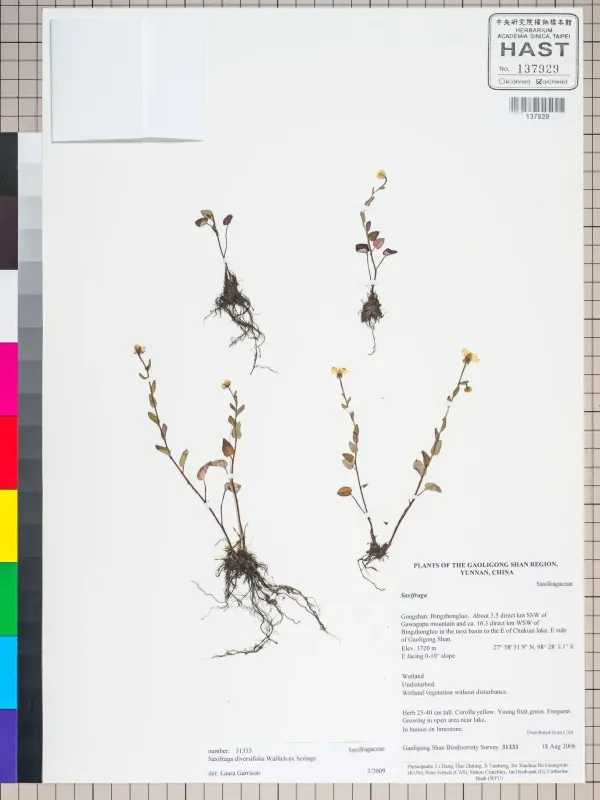
Description
Growing requirements
Saxifraga diversifolia is a member of the Saxifragaceae family, known for its unique ability to thrive in harsh, high-altitude mountain environments. As an alpine perennial, it is highly valued for its resilient nature.
The plant features distinct basal rosettes and attractive yellow blossoms. Its morphology is perfectly adapted to survive in crevices, with a specialized root system that efficiently extracts nutrients from mineral-rich debris.
To cultivate this species successfully, one must replicate its natural habitat. This means a cool, alpine-like climate with plenty of fresh air circulation and protection from the intense heat of the afternoon sun.
Soil requirements are strictly mineral-focused. A grit-based substrate with excellent drainage is mandatory, as the plant cannot tolerate wet feet or stagnant moisture which causes immediate root damage.
In landscaping, this species serves as a focal point in rock gardens. It is appreciated by enthusiasts for its structural beauty and its ability to withstand low temperatures during the dormant season.
Main diseases and pests
Root rot is the most significant threat to Saxifraga diversifolia, typically caused by waterlogged soil. Ensuring that the planting site has adequate slope or gravel drainage is key to prevention.
Spider mites are a persistent pest, especially in greenhouses or during dry, hot spells. They cause yellowing and spotting of leaves, which can lead to premature plant decline if ignored.
Fungal pathogens such as powdery mildew can occur if the humidity levels are too high combined with poor air circulation. Regular pruning of dead leaves helps maintain hygiene.
Effective pest management involves early detection through routine inspections and the judicious use of horticultural soaps or pesticides when infestation occurs.
Maintaining proper spacing between plants ensures that air moves freely, which significantly reduces the probability of infection spreading across the rockery collection.