
Saxifraga dinnikii
Saxifraga dinnikii
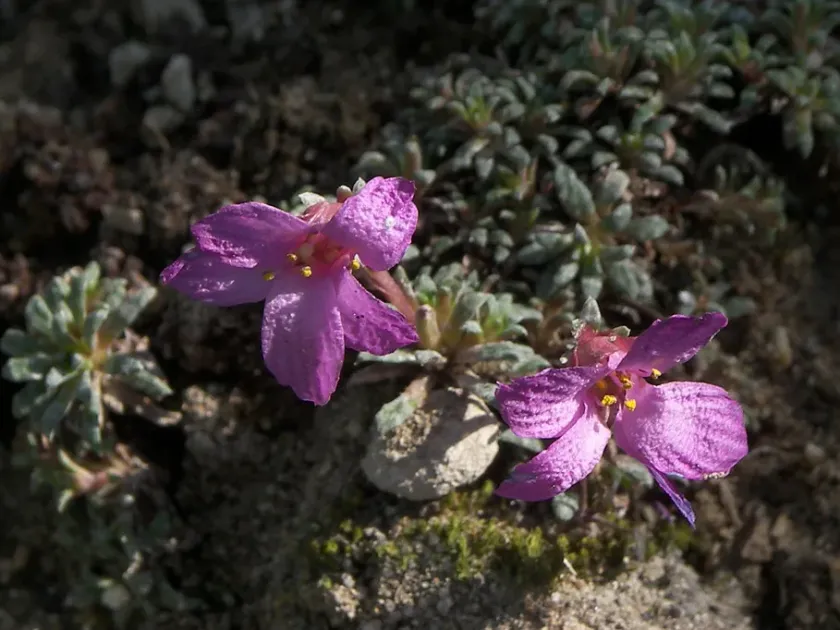
Description
Growing requirements
Saxifraga dinnikii is a perennial herbaceous plant belonging to the Saxifragaceae family. This species is native to the high-altitude regions of the Greater Caucasus, where it thrives in rocky crevices and limestone cliffs, showing high adaptation to extreme alpine climates.
Botanically, it forms dense, compact cushions of rosettes, which are highly valued in horticultural practices for their architectural beauty. The plant displays significant morphological resilience, allowing it to survive in environments with poor soil development and high solar radiation.
Successful cultivation requires a strict imitation of its natural habitat. The primary requirement is excellent drainage; therefore, the substrate must consist of at least 50% grit or gravel to ensure that water never stagnates around the root zone.
The plant prefers cool, airy environments with plenty of indirect sunlight. In garden settings, it is best placed in rock gardens or troughs where moisture can drain quickly, mimicking the steep mountain slopes where the species naturally originates.
Regarding soil composition, Saxifraga dinnikii favors calcareous, mineral-rich, and nutrient-poor soils. Incorporating crushed limestone into the planting medium is crucial for maintaining the plant's health and typical growth patterns.
Main diseases and pests
The most significant threats to Saxifraga dinnikii are fungal diseases, particularly crown rot and leaf spot, which occur when the crown is exposed to excessive humidity and poor ventilation. Keeping the area surrounding the rosettes dry is the most effective preventive measure.
Pests such as spider mites can infest the plants during hot, dry spells if air circulation is insufficient. Additionally, aphids may target young, succulent growth during the spring flowering season, requiring careful monitoring.
To mitigate disease risks, always avoid overhead watering and ensure the plant is mulched with fine gravel. This practice prevents the foliage from touching the damp soil, which is a common cause of rot in high-altitude species.
If rot is detected, affected rosettes must be removed immediately, and the surrounding area should be treated with a systemic fungicide. Regular inspection of the cushions is necessary to identify potential problems before they spread to the entire colony.
In winter, protecting the plant from excessive moisture is vital. While the species is cold-hardy, alternating freezing and thawing cycles in damp conditions can damage the crown, making winter protection against rain essential.