
Saxifraga diapensioides
Saxifraga diapensioides
Description
Growing requirements
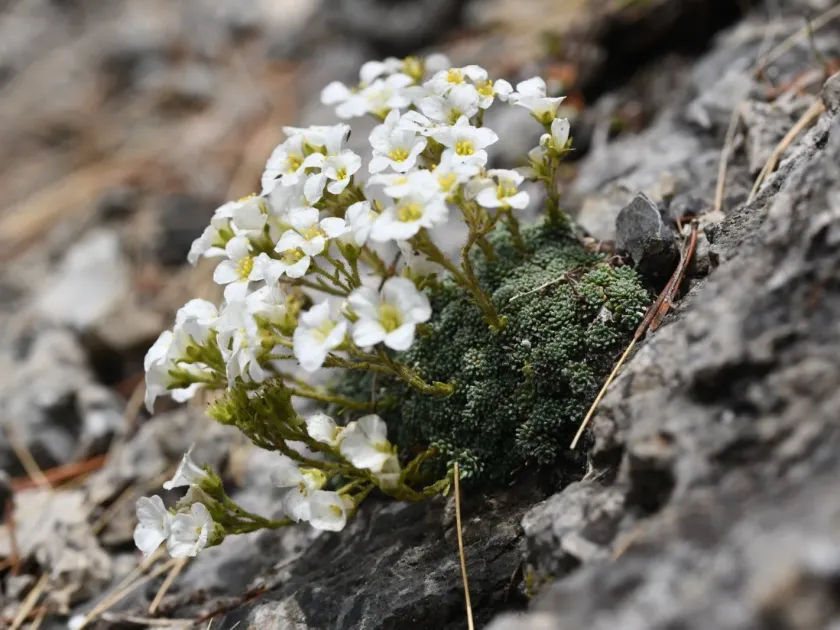
Saxifraga diapensioides is a miniature, evergreen perennial belonging to the Saxifragaceae family. This species is native to the high-altitude regions of the Alps, where it naturally inhabits limestone cliffs and rocky crevices, forming extremely tight, cushion-like mats.
Botanically, the plant is characterized by its congested rosettes of tiny leaves, which create a hard, compact surface. These leaves are often encrusted with natural lime deposits, which serve as a physiological adaptation to harsh alpine conditions, reflecting light and retaining moisture.
In terms of cultivation, this species is considered a demanding alpine plant. It requires an exceptionally well-drained substrate, such as a mix of grit, limestone chippings, and minimal organic matter. It must be grown in a site that mimics its natural stony habitat, ensuring no water retention.
Climate requirements focus on cool, fresh air and bright sunlight. The plant thrives in mountainous climates but struggles in hot, humid lowlands. For successful growth in gardens, growers often use raised troughs or alpine scree beds to provide ideal airflow and drainage.
The primary horticultural use of Saxifraga diapensioides is as a highly-prized specimen plant for alpine houses and rock gardens. Its slow growth rate and unique structural aesthetic make it a staple for alpine enthusiasts and collectors of rare, mountain-dwelling flora.
Main diseases and pests
The most significant threat to this species is rot, typically caused by excess moisture trapped within the cushion or around the root collar. Careful watering that avoids wetting the foliage is critical to preventing fungal decay in the tight rosettes.
Pests such as red spider mites can pose a problem, especially in confined alpine house environments with limited airflow. Maintaining good ventilation is essential to discourage these pests and ensure the overall health of the cushion.
Winter wet is a critical danger, as melting snow or frequent rain can trigger rot. Many growers use protective glass panes to keep the plants relatively dry during the dormant season, which is often the most vulnerable time for these mountain plants.
Root aphids may occasionally infest the root systems in pots. Using a sterile, inorganic substrate and regular monitoring of plant vigor are standard practices to prevent these pests from establishing themselves in the growth medium.
Nutrient toxicity is another potential issue; as a species adapted to nutrient-poor soils, it does not tolerate fertilization well. Excessive feeding can cause the plant to grow too rapidly, losing its characteristic compact habit and becoming susceptible to various pathogens.