
Saxifraga cuneata
Saxifraga cuneata
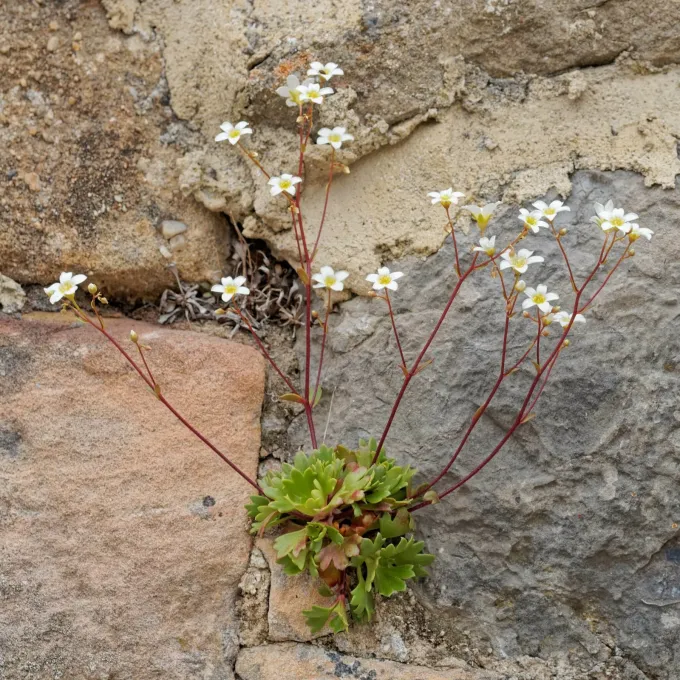
Description
Sowing dates
Seeds of Saxifraga cuneata should be sown in late winter or early spring. They generally benefit from a period of cold stratification to break dormancy and ensure consistent germination rates.
The sowing medium should be a mixture of peat, fine sand, and grit to ensure lightness and porosity. Seeds should be surface-sown and barely covered, as light exposure is beneficial for the germination process.
Once seedlings have developed a few sets of true leaves, they can be pricked out into small pots. It is essential to maintain a stable environment during the early stages of plant development.
Transplanting into the permanent garden site should be performed once the danger of heavy spring frost has passed. Space the plants adequately to ensure good air circulation around the rosettes.
Propagation through division of older clumps is also common. This process is best performed in the spring, allowing the newly established plants enough time to root before the peak of the summer season.
Growing requirements
Saxifraga cuneata, commonly known as wedge-leaved saxifrage, is a perennial herbaceous plant belonging to the Saxifragaceae family. It is native to the rocky and mountainous regions of the Iberian Peninsula.
The plant is characterized by its evergreen rosettes of wedge-shaped, serrated leaves. This structure allows the plant to thrive in harsh environments, effectively conserving moisture and resisting temperature fluctuations.
In terms of cultivation, it requires a well-drained substrate, ideally with a limestone base. Poor drainage is the most significant limiting factor for its growth, as the plant is highly susceptible to root rot in waterlogged conditions.
Climatically, it prefers cool conditions with moderate exposure to light. While it can handle direct sun in mountain habitats, garden cultivation usually requires semi-shaded positions to prevent foliage scorch during high summer heat.
This species is primarily used in landscaping and horticulture. It serves as an excellent choice for rock gardens, stone walls, and trough plantings due to its compact habit and hardiness.
Main diseases and pests
The main threats to Saxifraga cuneata are fungal pathogens, specifically those causing root and crown rots. These diseases are almost exclusively linked to overwatering or inadequate soil drainage.
Slugs and snails present a significant risk to the succulent foliage, particularly during damp weather. Protective barriers like crushed shells or fine gravel around the plant base can help deter these pests.
Aphids can occasionally cluster on the flower stems. Early detection and the use of insecticidal soaps or neem oil are effective ways to manage outbreaks without damaging the delicate plant tissue.
Maintaining cleanliness in the planting area is crucial. Regularly removing dead leaves and spent flower stalks prevents the buildup of organic matter that can foster bacterial and fungal growth.
Good air circulation is a primary defense against common pests and diseases. By placing the plants in open, well-ventilated areas, gardeners can significantly improve the longevity and health of their saxifrages.