
Saxifraga crustata
Saxifraga crustata
Description
Sowing dates
Saxifraga crustata can be propagated through seeds or by separating small offsets, known as rosettes, which grow around the base of the main plant.
Seeds should be sown in late winter or early spring using a well-drained, gritty compost mix that mimics the natural mineral-rich rocky environment.
Since the seeds are very small, they must be surface-sown and pressed gently into the substrate without covering, as they require light for successful germination.
Vegetative propagation using offsets is preferred by many growers, as it ensures the new plants are clones of the parent and establish themselves more quickly.
When transplanting into the garden, it is crucial to ensure that the rosettes are positioned firmly against rocky surfaces to provide the necessary support for growth.
Growing requirements
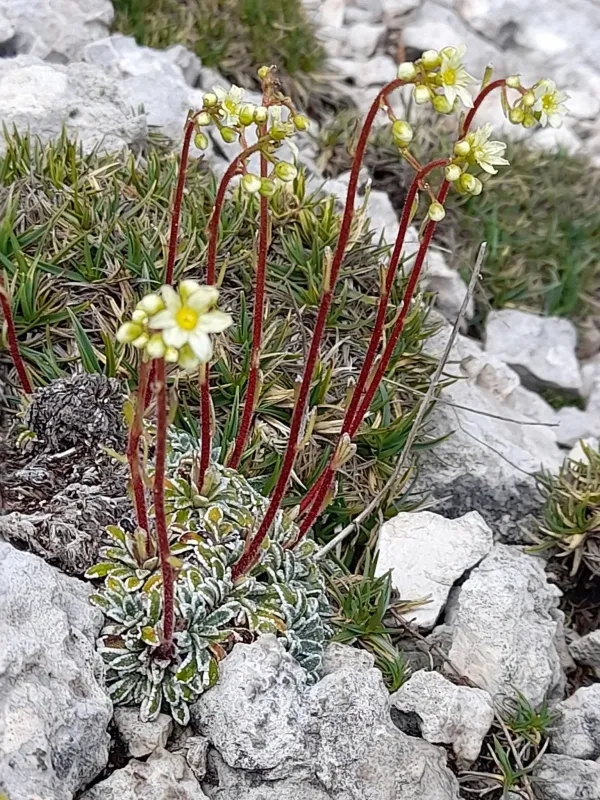
Saxifraga crustata belongs to the Saxifragaceae family and is a perennial herb native to the limestone cliffs of the Southeastern Alps.
The plant is characterized by its compact, silver-margined leaves, which feature calcium carbonate deposits that give the foliage an encrusted appearance.
It thrives in alkaline, free-draining soils and is specifically adapted to low-nutrient environments, making it an excellent choice for rock gardens and crevices.
The climate requirements involve plenty of direct sunlight or partial shade, with cool, airy conditions that prevent the buildup of stagnant humidity around the leaves.
Maintaining a vertical or slightly slanted position for planting helps prevent water from pooling in the center of the rosettes, which is essential for survival.
Main diseases and pests
The most significant threat to the health of this species is fungal rot, which typically occurs when there is poor drainage or excessive soil moisture.
Root system vulnerability increases significantly in humid environments, leading to wilting and death if the substrate does not dry out sufficiently between waterings.
Pests such as spider mites may infest the foliage during particularly dry and hot seasons, causing discoloration and stunting the overall growth of the plant.
Slugs and snails can cause substantial damage to the succulent leaves, particularly during the growing season when tender new growth is most abundant.
Proper sanitation, including the removal of dead lower leaves and ensuring good air circulation, is the best strategy for preventing disease outbreaks in rockery settings.