
Saxifraga columnaris
Saxifraga columnaris
Description
Growing requirements
Saxifraga columnaris belongs to the Saxifragaceae family. This perennial herb is native to the high-altitude mountainous regions of the Balkan Peninsula, where it typically inhabits limestone rock crevices and harsh alpine slopes.
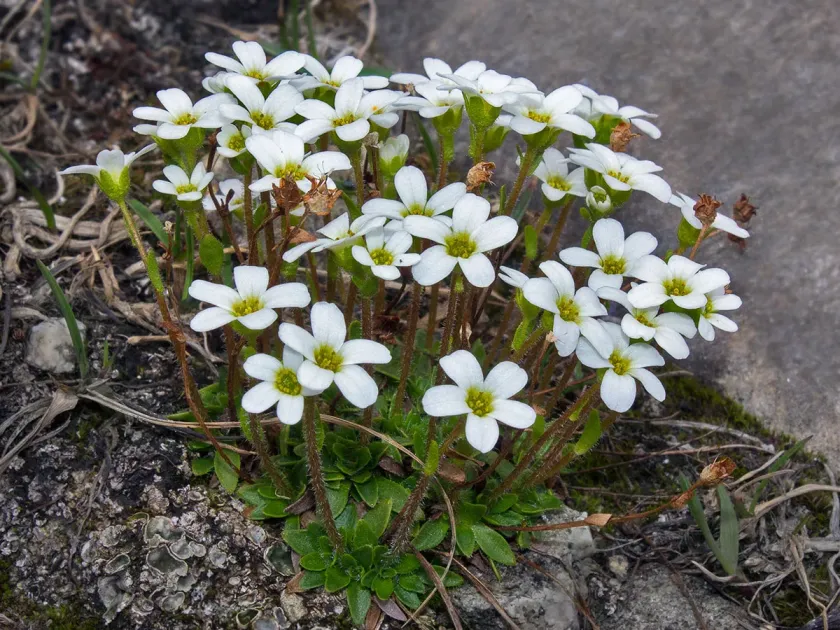
The plant is highly valued for its distinct, dense cushion-forming habit. It grows in small, tightly packed rosettes that create a columnar appearance, an evolutionary adaptation to preserve moisture and survive in nutrient-poor environments with extreme temperature fluctuations.
Success in cultivation requires a specialized substrate consisting primarily of mineral components. A sharp-draining, gritty limestone soil mix is essential to prevent water from stagnating around the root system, which is the most critical factor for plant survival.
This species thrives in cool, well-ventilated conditions with high light exposure. In a garden setting, it is best suited for rock gardens, troughs, or alpine houses where the gardener can precisely control the level of humidity and soil moisture.
Maintenance involves minimal intervention. Regular watering is only necessary during extended dry spells, and fertilizing should be avoided, as it encourages weak, etiolated growth that ruins the natural architectural structure of the plant.
Main diseases and pests
The primary threats to Saxifraga columnaris are fungal pathogens, specifically those causing root and crown rot. These issues are almost exclusively linked to poor drainage or overly humid environments, which cause the base of the rosettes to succumb to decay.
Pest management focuses on monitoring for spider mites and root-knot nematodes, which can thrive in the crevices of the dense foliage. Proper airflow and maintaining a dry surface around the rosettes are the most effective preventive measures against infestation.