
Saxifraga cebennensis
Saxifraga cebennensis
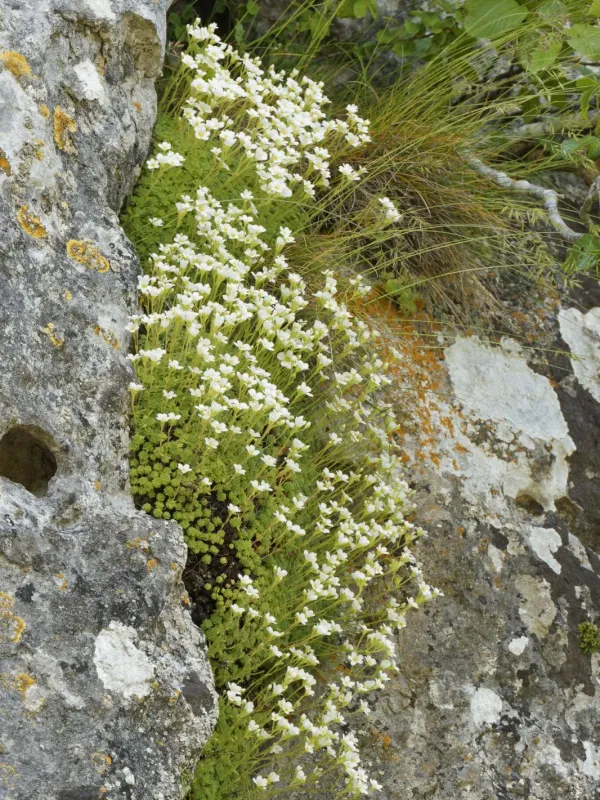
Description
Sowing dates
Propagation of Saxifraga cebennensis is best achieved through seed sowing in spring, utilizing a controlled environment such as a greenhouse or a cold frame. Seeds are extremely small and should be sown on the surface of a well-draining grit-based compost, pressed gently, and left uncovered.
Stratification is a key requirement for successful germination. Keeping the seed trays in a cool environment for several weeks mimics the natural winter conditions, effectively breaking seed dormancy and ensuring a more uniform emergence of seedlings.
Vegetative propagation via cuttings or division of established clumps is the preferred method for maintaining the purity of the variety. Dividing the plant should be done immediately after the flowering period to allow the divisions time to establish roots before winter.
When transplanting into the rock garden, ensure the soil is loose and gritty. Placing the young plants in a slightly raised area helps to improve drainage and prevent the crown of the plant from staying too wet, which is the most common cause of failure.
The spacing between plants should be approximately 15-20 cm to allow for proper airflow. Mulching the area around the base with limestone chips not only enhances the aesthetic appeal but also keeps the foliage dry, protecting it from soil-borne pathogens.
Growing requirements
Saxifraga cebennensis belongs to the Saxifragaceae family and is native to the Cévennes mountain range in France. It is a cushion-forming perennial, perfectly adapted to limestone cliffs and rocky screes, making it an excellent candidate for alpine landscaping.
The plant requires a soil environment that is well-draining and slightly alkaline. A mixture consisting of sand, perlite, and fine gravel provides the necessary substrate to prevent waterlogging, which the plant cannot tolerate for extended periods.
Sunlight requirements are quite specific; while the plant thrives in bright light, it appreciates afternoon shade in warmer climates to protect it from extreme heat. Exposure to intense, direct summer sun for too long can lead to desiccation and foliage burning.
Temperature tolerance is high in terms of cold, as the plant is hardy and adapted to mountain climates. However, it requires a stable environment and does not appreciate rapid temperature fluctuations, particularly during early spring thaw cycles.
Water management is crucial. The plant prefers consistent, moderate moisture without any standing water. During the dormant winter phase, it is vital to keep the plant relatively dry to prevent the soft tissues from succumbing to rot caused by ice and humidity.
Main diseases and pests
Root and crown rot are the primary threats to Saxifraga cebennensis, usually caused by improper soil moisture levels or poor drainage. Once infection starts, the cushion can deteriorate rapidly, requiring the removal of infected parts to save the plant.
Spider mites can be a problem during hot and dry summer spells. They target the foliage, causing it to lose its vibrant green color and appear dusty or bleached. Increasing humidity around the plant and using appropriate miticides can manage these infestations.
Aphids tend to colonize the emerging flower stalks, stunting growth and distorting the flower buds. Regular monitoring and the application of mild insecticidal soaps are effective methods for keeping aphid populations at a manageable level.
Gastropods such as slugs and snails are attracted to the succulent-like foliage during damp weather conditions. Installing physical barriers or using pet-safe slug pellets around the perimeter of the alpine garden is recommended to prevent significant leaf damage.
To prevent disease outbreaks, sanitation is essential. Dead leaves within the cushion should be carefully removed with tweezers or small pruning shears to ensure airflow and reduce the presence of decaying organic matter that fosters fungus growth.