
Saxifraga camposii
Saxifraga camposii
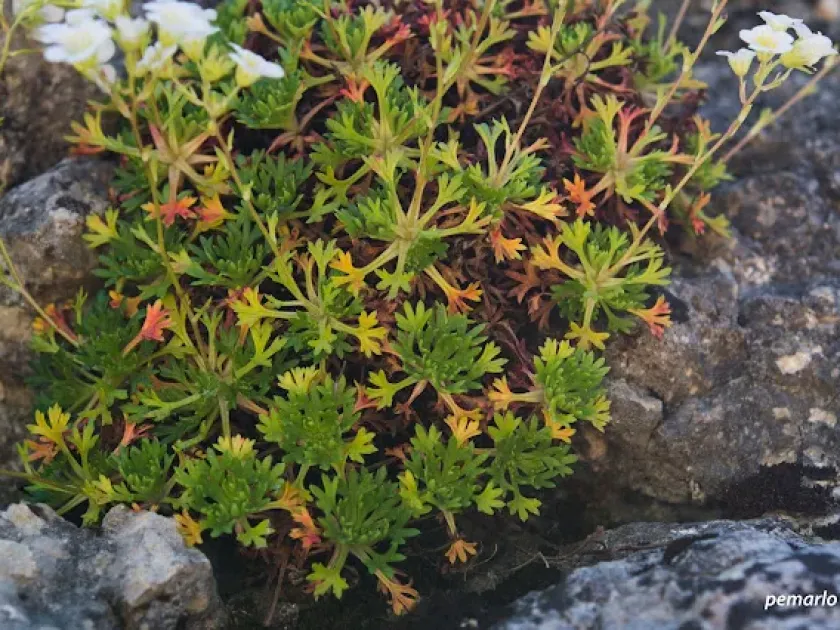
Description
Sowing dates
Cultivation of Saxifraga camposii, a member of the Saxifragaceae family, primarily involves seed propagation or division of established clumps. Seeds should be sown early in spring in a fine, well-draining seed mix, ensuring they are only lightly pressed into the surface as they require light to germinate.
Maintaining a consistent temperature between 15 and 18 degrees Celsius is crucial for successful germination. It is advisable to cover the seed tray with glass or clear plastic to maintain humidity, but provide daily ventilation to prevent fungal issues.
For vegetative propagation, healthy lateral rosettes are separated from the parent plant after flowering. These cuttings should be planted in a gritty substrate and kept in a shaded, humid environment until roots are firmly established.
Seedlings should be pricked out into individual pots once they develop their first set of true leaves. Transitioning the plants to outdoor conditions requires a gradual hardening-off process to ensure they survive transplant shock.
Transplanting into the garden bed should occur after the final spring frost. Spacing plants 20 to 30 centimeters apart allows for adequate airflow, which is essential to prevent the accumulation of moisture within the dense foliage mounds.
Growing requirements
Native to the limestone mountains of Spain, Saxifraga camposii thrives in conditions that mimic its natural rocky habitat. It is highly valued in ornamental horticulture for its ability to grow in rock gardens and wall crevices where other plants struggle.
The primary soil requirement is excellent drainage. The species cannot tolerate waterlogged conditions, which lead to rapid root rot. A substrate composed of loam mixed with a significant amount of limestone grit or sharp sand is optimal for long-term health.
Regarding climate, the plant prefers cooler environments and partial shade. While it can tolerate some sun, it is prone to leaf scorch if exposed to direct, intense afternoon heat in warmer regions; therefore, a northeast-facing aspect is typically preferred.
Watering needs are moderate. While the plant should not be allowed to dry out completely for extended periods, the key is to keep the soil moist but never saturated. Self-watering systems or drip irrigation are often discouraged in favor of manual, controlled watering.
Maintenance is minimal. The plant is hardy, but in areas with harsh, freezing winters and no snow cover, a light protective mulch of leaves or a horticultural fleece cover can prevent damage to the evergreen foliage rosettes.
Main diseases and pests
The most significant threats to Saxifraga camposii are fungal pathogens, specifically grey mold (Botrytis). This occurs frequently in stagnant air conditions or when the plant is kept too damp, requiring immediate removal of affected tissues.
Root rot is a physiological condition induced by poor soil structure. If the soil remains soggy for too long, the root system will decay. Remediation involves checking the drainage capacity of the planting site and potentially incorporating more grit into the soil.
Aphids can be problematic during the active growth phase, clustering on tender new shoots and flower stalks. A gentle application of insecticidal soap or neem oil is usually sufficient to control these pests without damaging the plant's delicate foliage.
Slugs and snails represent a constant challenge in rock gardens. These pests find the succulent leaves of the saxifrage very palatable, often leading to severe defoliation if left unchecked during wet weather spells.
Root nematodes can infest the soil, causing stunted growth and poor health. Because control of nematodes is difficult, it is best to practice good hygiene, ensuring that new plants are inspected before introduction and avoiding infested soils.