
Saxifraga burseriana
Saxifraga burseriana
Description
Growing requirements
Saxifraga burseriana is a prominent member of the Saxifragaceae family. This cushion-forming evergreen perennial is native to the limestone cliffs and screes of the Eastern Alps, where it thrives in extreme, nutrient-poor conditions.
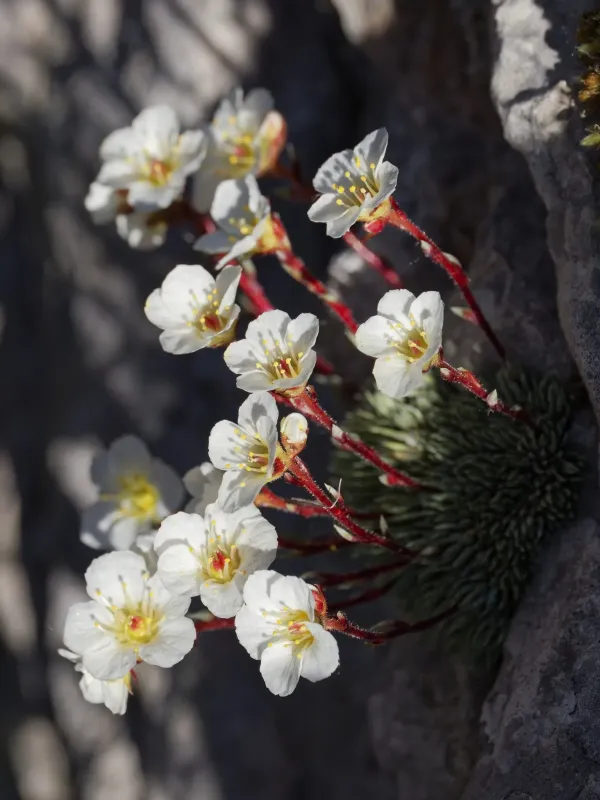
Botanically, it is recognized by its tight, moss-like mats consisting of prickly, linear leaves. During the early spring, the plant produces relatively large, solitary, white or pale pink flowers on short stems, which create a striking contrast against the dark foliage.
For cultivation, this species demands a highly specialized substrate that mimics its natural limestone habitat. The soil must be exceptionally well-draining, typically consisting of a mix of grit, limestone chippings, and minimal organic matter to prevent root suffocation.
Climate requirements include exposure to cool mountain air and bright, filtered sunlight. While it appreciates morning sun, protecting the plants from intense midday heat is critical, as high temperatures coupled with high humidity can be lethal to the species.
Maintenance involves minimal fertilization, as this species is adapted to lean soils. Regular propagation is usually done by taking small cuttings from the cushion or by careful division, though the plant is known for its slow growth rate in both container and rock garden settings.
Main diseases and pests
The primary threats to Saxifraga burseriana are fungal infections such as root rot and stem rot. These occur almost exclusively when the substrate remains saturated for prolonged periods, which is common in climates with high annual rainfall.
Pests such as spider mites are a major concern during dry, hot spells. They feed on the sap of the leaves, eventually causing the tight cushions to turn brown and lose their vitality, which is difficult to reverse once damage is done.
Slugs and snails represent a constant threat to the delicate foliage. These pests can rapidly destroy the structural integrity of the plant's cushion, leaving behind unattractive gaps and promoting further secondary infections.
Mitigation strategies include top-dressing with coarse gravel, which keeps the leaf foliage away from moist soil and improves airflow. Using systemic fungicides as a preventative measure during damp springs is a standard practice for professional alpine nurseries.
Pest management relies on integrated control measures, including manual removal of gastropods and the application of acaricides for mites. Maintaining a strict irrigation schedule that avoids wetting the foliage itself is paramount to long-term health.