
Rough saxifrage
Saxifraga aspera
Description
Growing requirements
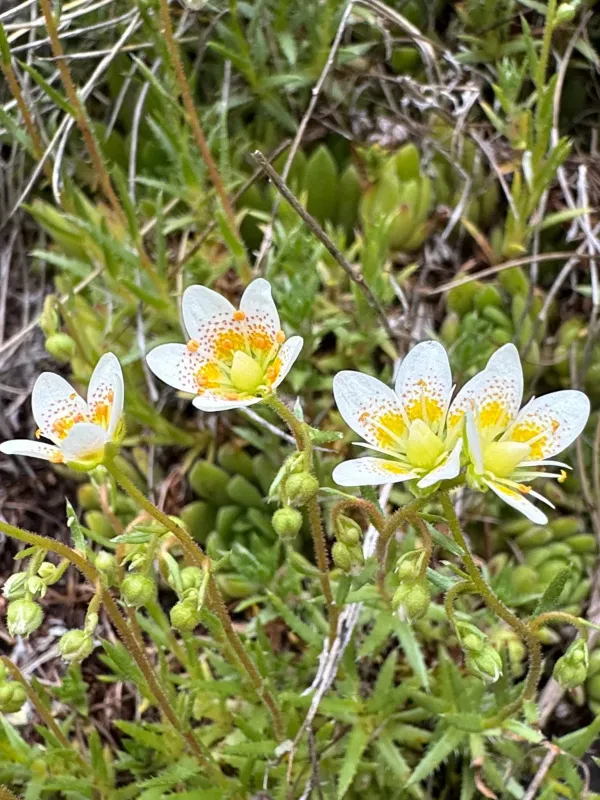
Rough saxifrage (Saxifraga aspera) is a perennial herbaceous plant belonging to the Saxifragaceae family. This species originates from the mountainous regions of Europe, where it naturally thrives in rocky crevices and alpine scree slopes.
The plant is characterized by its cushion-forming growth habit, creating dense mats of foliage. Its leaves are small, stiff, and rough to the touch due to specialized hairs, which are a morphological adaptation to high-altitude environmental stress.
For successful cultivation, the plant requires a cool climate and excellent drainage. It is poorly adapted to high humidity, especially during the summer, and demands a substrate that allows water to pass through quickly to prevent root rot.
Optimal soil conditions include a gritty, stony mix with a slightly acidic to neutral pH. In garden settings, it is best suited for rock gardens, troughs, or dry-stone walls where it can mimic its native habitat's structural composition.
The main horticultural use of Saxifraga aspera is as a ground cover in specialized rock garden landscaping. It is highly valued for its hardiness and the ability to provide a clean, textured look to difficult-to-plant stony areas.
Main diseases and pests
The most significant threat to rough saxifrage is fungal infection, primarily root and crown rot caused by poor soil drainage or excessive stagnant moisture around the base of the plant.
Pests such as aphids and spider mites can occasionally damage the foliage, particularly if the plant is under stress from high temperatures or drought. Slugs and snails are also common opportunistic pests in damp conditions.
To prevent disease, it is essential to use a generous layer of grit or fine gravel mulch around the base of the cushion. This ensures that the leaves stay dry and prevents pathogens from splashing onto the foliage during rain.
When infestation occurs, targeted insecticides can be applied. However, maintaining high air circulation and avoiding overhead watering are the most effective strategies for long-term health and disease prevention.
Weed management is critical during the establishment phase, as the plant grows relatively slowly. Once the mat is well-established, it becomes competitive enough to occupy space effectively against invading common garden weeds.