
Saxifraga aphylla
Saxifraga aphylla
Description
Growing requirements
Saxifraga aphylla is a perennial plant belonging to the Saxifragaceae family, naturally occurring in high-altitude alpine zones. It is highly adapted to extreme conditions and is valued for its compact, cushion-forming growth habit.
The cultural success of this plant depends on providing a gritty, fast-draining substrate. It does not tolerate heavy, moisture-retaining soils, which can cause crown rot and plant collapse during the dormant season.
In terms of climate, the species requires cool, airy environments with plenty of indirect sunlight. Direct, scorching sun at low altitudes can damage the foliage, while high humidity often leads to fungal outbreaks.
Agricultural techniques for this plant are minimal. It requires very little fertilization; in fact, over-fertilizing is detrimental as it promotes succulent, weak growth that is prone to pests and winter damage.
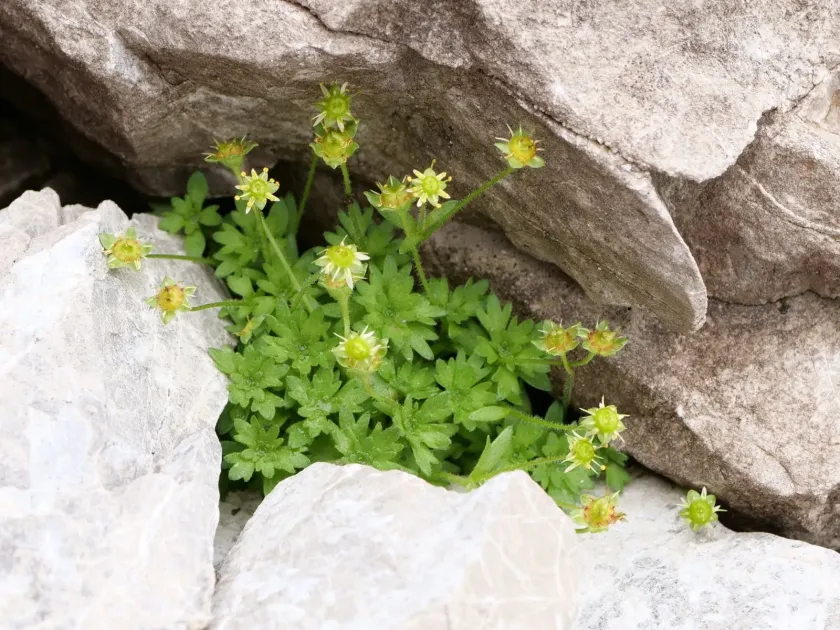
Botanically, Saxifraga aphylla features small, dense rosettes that act as micro-habitats. The root system is surprisingly extensive given the plant's size, allowing it to anchor securely in rocky crevices.
Main diseases and pests
Fungal pathogens, particularly those causing root and crown rots, are the primary threat to the health of Saxifraga aphylla. These diseases thrive in environments with poor circulation and excessive moisture retention.
Aphids can occasionally infest the growing tips during the spring months. While generally not fatal in healthy specimens, a heavy infestation can cause stunted growth and weaken the plant's overall vigor.
Slugs and snails are notorious for feeding on the fleshy leaves, which can disfigure the plant and create entry points for secondary bacterial infections. Physical barriers like crushed stone are recommended for prevention.
Environmental stress, such as sudden shifts in humidity or heat waves, can lead to physiological disorders. Proper placement in an alpine garden or a rockery is the best form of insurance against such threats.
Regular monitoring and the prompt removal of decaying plant debris are essential management practices. Maintaining a clean and well-drained growing area is the cornerstone of keeping Saxifraga aphylla healthy.