
Sarcostemma viminale
Sarcostemma viminale
Description
Growing requirements
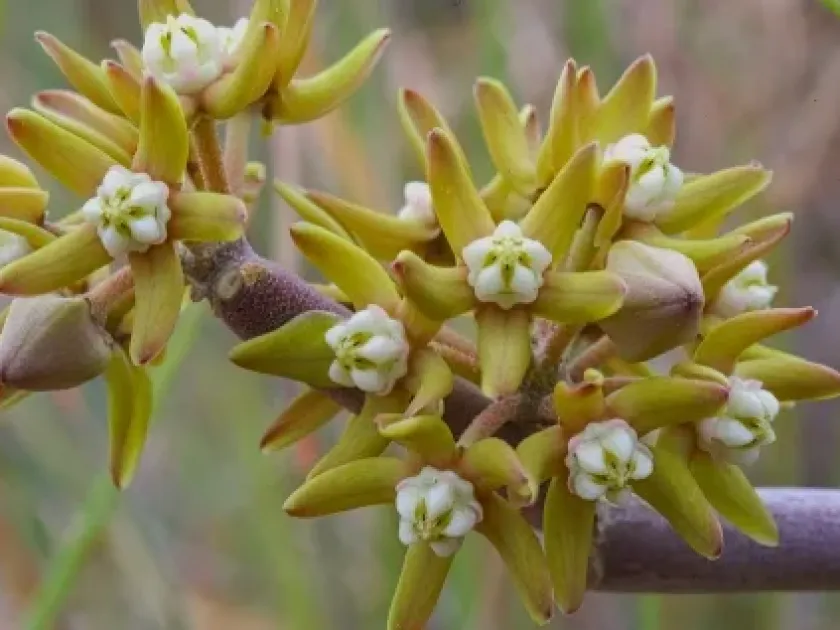
Sarcostemma viminale is a perennial succulent plant belonging to the Apocynaceae family. It is characterized by its leafless, green, cylindrical stems that function as the primary photosynthetic organs, allowing the plant to thrive in arid environments.
Originating from tropical and southern Africa, this species is naturally adapted to harsh, arid climates. It typically inhabits rocky outcrops and dry savannas where it survives by storing water within its succulent tissues during periods of rainfall.
To successfully cultivate Sarcostemma viminale, one must provide well-draining soil and a location with full sun exposure. It is a strictly thermophilic plant, requiring temperatures that remain significantly above freezing throughout the growing season.
Agrotechnical management involves infrequent watering, allowing the substrate to dry out completely between applications. It is crucial to maintain low humidity levels around the plant to prevent the development of opportunistic fungal infections that can compromise the stems.
The economic value of this crop is primarily focused on its use in xeriscaping and as a source of phytochemical research. It is known for its toxic latex, which dictates specific handling procedures during propagation and routine maintenance tasks.
Main diseases and pests
The primary threats to the cultivation of Sarcostemma viminale involve physiological disorders caused by poor soil drainage and waterlogging, which rapidly lead to stem rot and systemic plant failure.
Pest management should focus on monitoring for sap-sucking insects, particularly mealybugs and aphids, which can cause significant damage to the epidermis of the stems and serve as vectors for secondary bacterial or viral infections.