
Sarcostemma australe
Sarcostemma australe
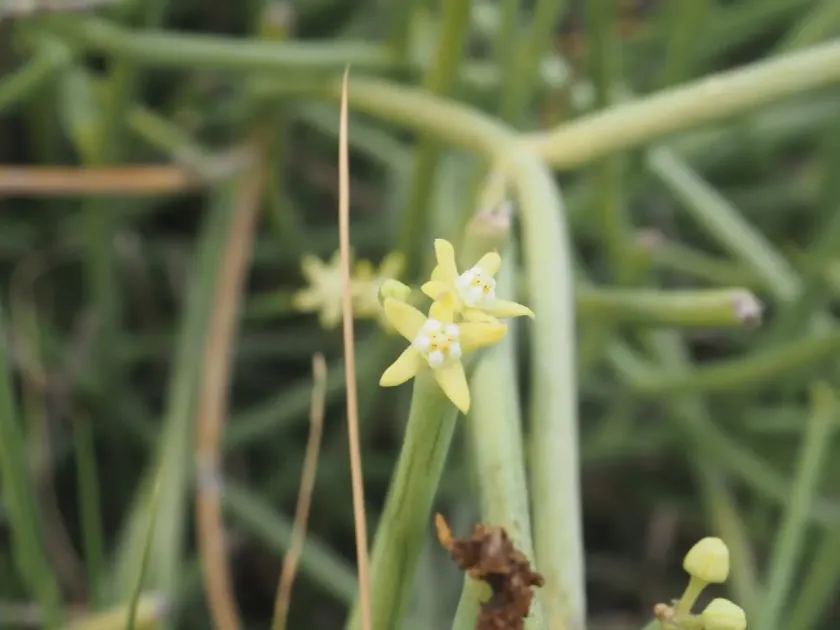
Description
Growing requirements
Sarcostemma australe, commonly known as the caustic vine, is a perennial succulent shrub belonging to the Apocynaceae family. It is native to the arid and semi-arid regions of the Australian continent.
The plant is highly adapted to harsh environments, thriving in sandy, rocky, and saline soils where nutrient availability is low. Its robust root system allows it to stabilize soil and survive in conditions of extreme water scarcity.
Botanically, it is characterized by leafless, green, cylindrical stems that perform photosynthesis. This structural adaptation significantly reduces water loss, making the plant exceptionally efficient at water retention.
It requires full sun exposure to maintain its metabolic functions. Cultivation must ensure excellent drainage, as the species is highly sensitive to waterlogging, which rapidly leads to root system degradation.
In its natural habitat, it acts as a resilient cover plant, capable of enduring prolonged droughts and intense heat, which are characteristic of the interior Australian landscape.
Main diseases and pests
The primary threats to Sarcostemma australe are fungal diseases caused by excessive moisture. When the soil remains waterlogged, the succulent stems become vulnerable to soft rot, which can destroy the entire plant.
Common pests include mealybugs and scale insects, which often congregate on the succulent stems. These insects penetrate the epidermis to access the plant's fluids, necessitating early detection and intervention.
While the plant contains a toxic milky latex that provides a degree of natural chemical defense, it is not immune to all herbivores or insect infestations under cultivation pressure.
Agricultural management should focus on maintaining a dry, well-ventilated environment to prevent the accumulation of pathogens. Monitoring for physical damage to the stems is essential, as wounds serve as entry points for infection.
Integrated pest management strategies should be employed to ensure that the ecological balance is maintained while protecting the plant from significant herbivore pressure during the establishment phase.