
Sarcococca wallichii
Sarcococca wallichii
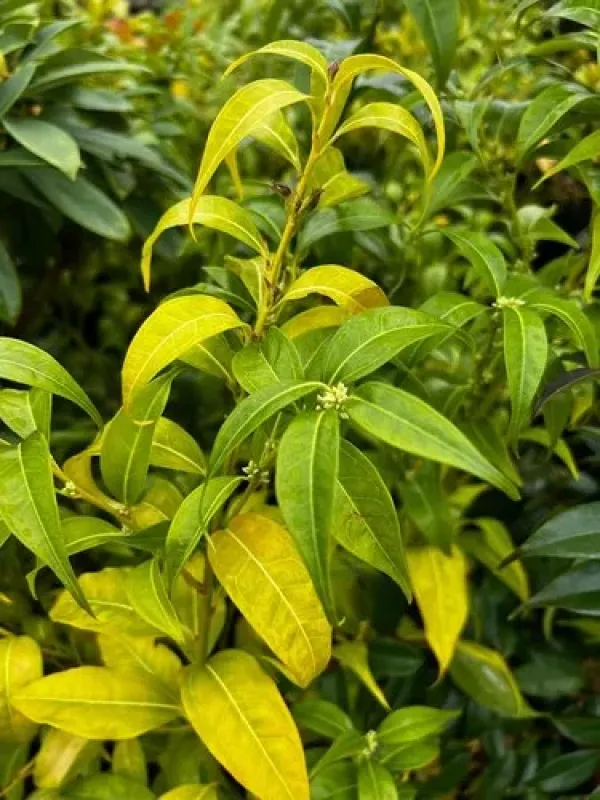
Description
Growing requirements
Sarcococca wallichii is a perennial evergreen shrub belonging to the Buxaceae family. It is highly valued in horticulture for its dense, glossy foliage and the unique fragrance of its small flowers that bloom in late winter or early spring.
Originating from the mountainous regions of the Himalayas and parts of East Asia, this species thrives in humid, woodland environments. Its native habitat provides essential protection from harsh weather conditions and direct sunlight, which dictates its cultivation needs.
Optimal growth requires shade or partial shade, as exposure to full sun can scorch the leaves and hinder development. These shrubs prefer well-drained, humus-rich, and slightly acidic soils, reflecting the natural forest floor conditions of their origin.
Maintenance involves ensuring consistent soil moisture, especially during the establishment phase. While tolerant of various conditions, Sarcococca wallichii performs best when protected from strong, desiccating winds and excessive freezing temperatures during winter.
The plant is versatile in landscape design, often utilized as an understory shrub for shady borders or in woodland gardens. Its slow growth habit makes it a low-maintenance choice for gardeners seeking permanent green structures in difficult lighting conditions.
Main diseases and pests
The most common biological threats to Sarcococca wallichii are root rots caused by waterlogged soil conditions. Proper drainage is the primary defense against these pathogens, as saturated soil prevents root respiration and encourages fungal growth.
Scale insects represent the most significant pest risk. These pests attach to stems and leaf undersides, extracting sap and causing secondary issues such as sooty mold growth, which inhibits the plant's ability to photosynthesize effectively.
Spider mites can become a problem in environments with low air humidity or during prolonged warm spells. Regular misting and keeping the plant hydrated are effective preventative measures to avoid infestation in greenhouses or protected garden areas.
Nutrient imbalances, particularly iron or magnesium deficiency, can lead to chlorosis. This condition causes yellowing of the foliage and indicates that the pH level of the soil may be unsuitable or that there is a lack of available micronutrients.
Management of pests and diseases should focus on cultural controls first, such as adequate spacing and regular pruning to improve airflow. Chemical interventions should only be used as a last resort, utilizing targeted pesticides for identified infestations.