
Sarcococca saligna
Sarcococca saligna
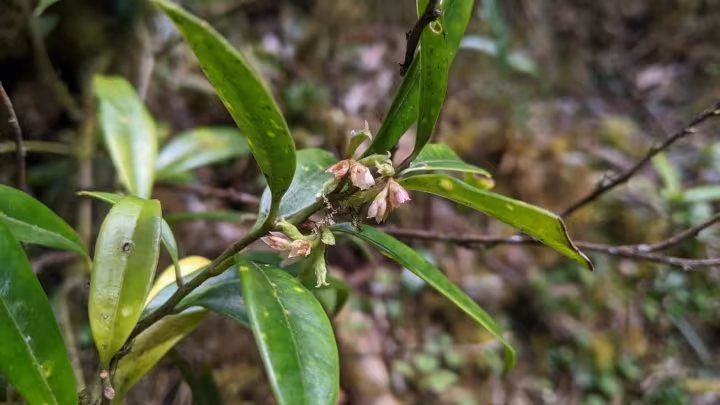
Description
Growing requirements
Sarcococca saligna, commonly known as a type of sweet box, is an evergreen shrub belonging to the Buxaceae family. Originating from the Himalayas, it is well-adapted to cool, shaded mountain environments.
The plant thrives in partial to full shade, making it an excellent choice for woodland gardens. Exposure to direct, harsh sunlight can damage the foliage, leading to yellowing or scorched leaf margins.
For optimal growth, the soil must be rich in organic matter and possess excellent drainage properties. While it prefers moisture, the plant cannot tolerate waterlogged conditions, which will lead to root decay.
Climatic requirements involve stable temperatures, as the species is sensitive to extreme frost and hot, dry winds. In cooler regions, it should be sheltered by walls or larger shrubs to mitigate temperature fluctuations.
Cultivation practices include consistent watering during the growing season, mulching with leaf mold or compost, and providing protection during unseasonably cold winters to ensure the health of the root system.
Yield
The primary use of Sarcococca saligna is in ornamental horticulture. Its willow-like leaves and fragrant, subtle winter flowers provide aesthetic value when few other plants are in bloom.
It is frequently used for low hedges, foundation plantings, and understory ground cover. The dense growth habit creates a clean, sophisticated look in professional landscape designs and domestic gardens.
Propagation is commonly achieved via semi-ripe cuttings taken during late summer. These cuttings root well in a moist, peat-free potting mix if kept in a humid environment until established.
Pruning is usually limited to light maintenance to maintain a tidy shape, as the shrub is naturally slow-growing. Any dead or damaged wood should be removed in early spring after the flowering period.
As a container-grown plant, it serves as an excellent decorative element for patios or entryways, provided that the container size is sufficient to support its long-term development.
Main diseases and pests
Sarcococca saligna is generally a robust plant with few serious health issues, provided that soil moisture levels are managed correctly. Overwatering is the most common cause of plant failure.
Pests such as scale insects and spider mites may appear if the plant is grown in conditions with poor airflow or excessively dry air. Regular monitoring is essential to keep the plant vigorous.
Control methods for pests include the application of horticultural oils or insecticidal soaps, which are effective for small infestations. It is important to treat the undersides of leaves where insects congregate.
Leaf spot diseases can occur during prolonged periods of high humidity and poor drainage. Ensuring sufficient spacing between individual plants improves ventilation and minimizes the risk of fungal development.
With correct site selection and minimal attention to soil chemistry, this shrub remains largely problem-free, rewarding gardeners with its evergreen presence throughout the year.