
Star cactus
Astrophytum asterias (Zucc.) Lem.
Description
Sowing dates
Sowing of Astrophytum asterias seeds is typically performed in early spring to utilize the natural increase in day length and ambient temperatures.
A well-draining, mineral-based seed mix is essential to prevent seedling damp-off, a common issue caused by fungal proliferation in moist environments.
Seeds should be distributed evenly on the surface of the substrate and covered lightly with fine grit or sand to hold moisture during the germination phase.
Maintaining a constant temperature between 25°C and 30°C is crucial, as fluctuating temperatures can inhibit the germination process of this species.
A high humidity level must be kept inside the seed container during the first few weeks, followed by a gradual increase in ventilation as the seedlings mature.
Growing requirements
The star cactus is a member of the Cactaceae family, native to the arid limestone regions of the Rio Grande Valley in Texas and northeastern Mexico.
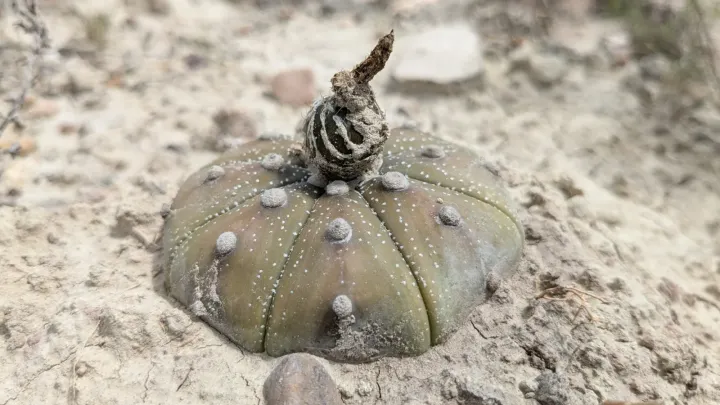
Botanically, it is a spineless, globular cactus with a distinct star-like pattern of white tufts (trichomes) covering its deep ribs, which function to reflect intense desert light.
Successful cultivation requires a highly porous, inorganic substrate with a neutral to slightly alkaline pH, ensuring that water passes through the roots rapidly.
The species requires plenty of bright, filtered light throughout the growing season to maintain its compact shape and promote healthy flowering cycles.
Watering management is the most critical aspect of maintenance: the plant should be allowed to dry out completely between waterings to prevent root rot.
Main diseases and pests
Root rot, driven by overwatering or poor soil aeration, is the primary threat to the health of the star cactus and can lead to irreversible damage.
Mealybugs are common pests that infest the crevices between the ribs, where they are protected and difficult to remove manually without careful inspection.
Red spider mites can cause scarring on the epidermis if the plants are kept in environments with poor air circulation and extremely low humidity.
Preventative care involves using systemic insecticides and fungicides, combined with strict hygiene practices in the growing area.
Monitoring the firmness of the base is an effective way to detect early stages of distress or pathogen attack before the condition becomes fatal.